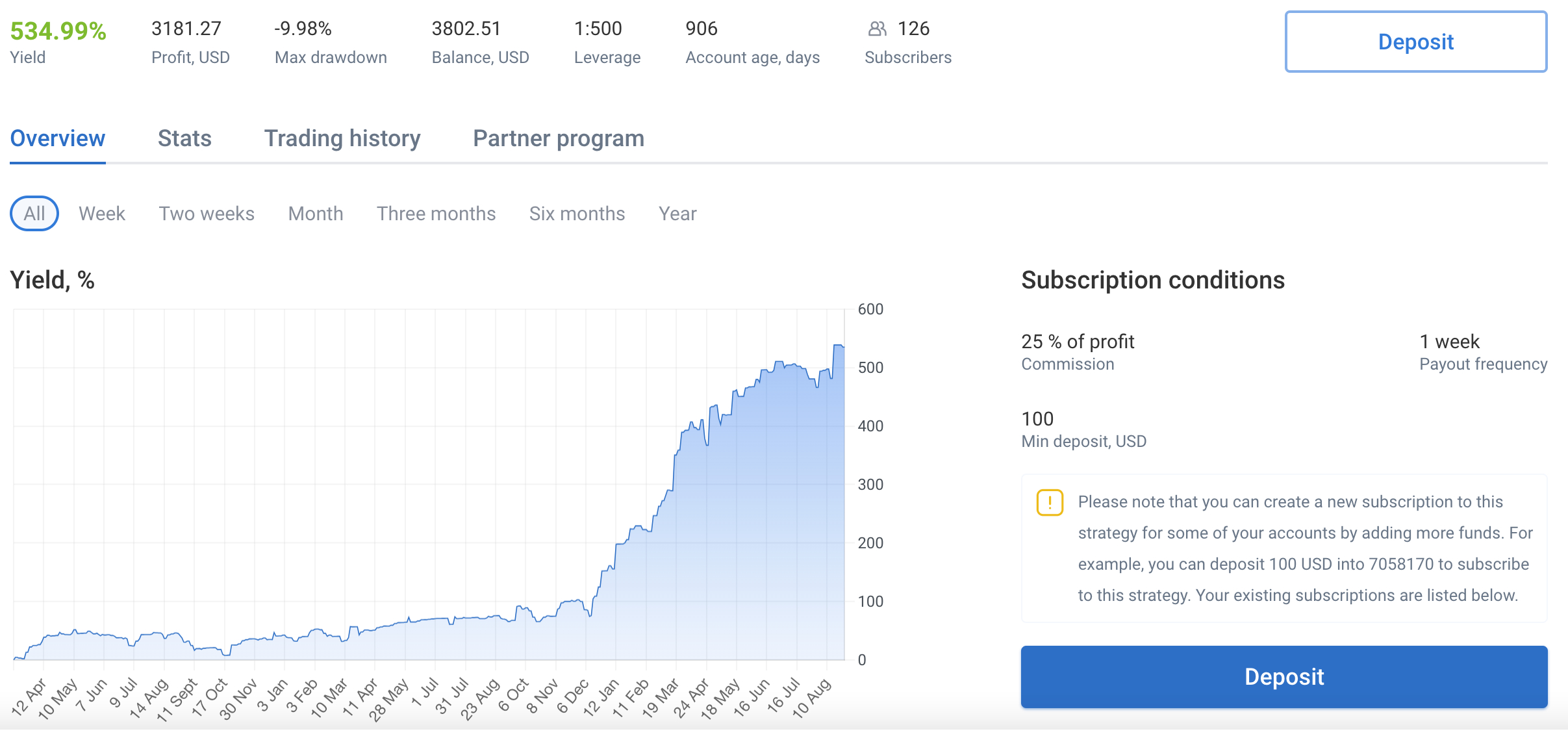
A Trading Copy System allows traders to automatically or semi-automatically replicate trades from another trader, strategy or trading account.
Instead of manually analyzing the market and entering every position yourself, a copy system can transfer trades from a master account to one or more connected trading accounts.
The concept is simple: one trader executes a trade, and the system copies it.
However, a Trading Copy System does not turn an unprofitable strategy into a profitable one. It simply automates the execution.
That is why the quality of the underlying trading strategy, risk management and execution remains crucial.

What Is a Trading Copy System?
A Trading Copy System is a technical solution that allows trades from one trading account to be replicated on another account.
For example, a trader opens a position on EUR/USD.
The copy system recognizes the trade and automatically opens a corresponding position on the follower’s account.
When the original trader closes the position, the copied trade can also be closed.
Depending on the system, position sizes can be adjusted based on account size, risk settings or predefined rules.
The basic process is:
Trader opens a trade → Copy system detects it → Trade is replicated → Position is managed
This can significantly reduce the amount of manual work involved in managing multiple accounts.
How Does a Trading Copy System Work?
A typical Trading Copy System connects a master account with one or more follower accounts.
The master account is where the original trading decisions are made.
The system monitors the account for new orders, modifications and closed positions.
When a new trade is detected, the system transfers the relevant information to the connected accounts.
This may include:
Entry price.
Direction.
Position size.
Stop-loss.
Take-profit.
Trade modifications.
Closing instructions.
The follower account can then execute the corresponding trade automatically.
The exact functionality depends on the technology, broker and trading platform being used.
Trading Copy System vs. Copy Trading
The terms Trading Copy System and Copy Trading are closely related but are not necessarily identical.
Copy Trading usually refers to the broader concept of following and replicating another trader’s strategy.
A Trading Copy System refers more specifically to the technology used to transfer trades between accounts.
For example, a copy system can be used to:
Copy one trader.
Copy multiple accounts.
Synchronize several trading accounts.
Automatically replicate trading signals.
Manage multiple accounts from a central strategy.
This makes copy systems particularly useful for traders who already have a defined trading strategy.
Why Use a Trading Copy System?
The biggest advantage is automation.
Imagine a trader manages five different trading accounts.
Without a copy system, every trade would need to be entered manually on each account.
This takes time and creates opportunities for mistakes.
A Trading Copy System can execute the same strategy across multiple accounts automatically.
This can help reduce manual entry errors and make account management more efficient.
Trading Copy System for Forex
Forex is one of the most common markets for trade copying.
Currency pairs such as EUR/USD, GBP/USD and USD/JPY can be copied between trading accounts.
A copy system can be used with different trading approaches, including:
Trend following.
Breakout trading.
Swing trading.
Scalping.
Price action.
Algorithmic trading.
The technical ability to copy a trade does not make the underlying strategy profitable.
The strategy itself remains the most important factor.
Trading Copy System for Gold and Indices
Copy systems are not limited to Forex.
Depending on the broker and trading infrastructure, traders may also use them for markets such as:
Gold.
Nasdaq.
DAX.
Other indices.
Commodities.
Cryptocurrencies.
The more volatile the market, the more important execution quality can become.
A large price movement within seconds can create differences between the original trade and the copied trade.
Benefits of a Trading Copy System
A properly configured copy system can provide several advantages.
The first is time savings.
A trader only needs to execute the strategy on the master account.
The connected accounts can receive the trades automatically.
Another benefit is consistency.
The same trading rules can be applied across multiple accounts without manually reproducing every position.
A copy system can also improve scalability.
A successful strategy can potentially be replicated across several accounts without increasing the amount of manual execution required.
The Strategy Is More Important Than the Technology
A copy system can execute trades perfectly.
That does not mean the strategy behind those trades is profitable.
This is one of the most important principles of copy trading.
If the underlying strategy loses money, the copy system simply transfers those losses more efficiently.
Before copying a strategy, analyze:
The trading history.
The maximum drawdown.
The average trade.
The risk per trade.
The win rate.
The average winning trade.
The average losing trade.
The use of leverage.
The strategy’s behavior during losing periods.
Technology should come second.
Strategy should come first.
Drawdown in a Trading Copy System
Drawdown is one of the most important metrics when evaluating a copy strategy.
Suppose a trading account grows from $10,000 to $15,000.
It then falls to $12,000.
The decline from the peak is $3,000, or 20%.
This is the drawdown from the high.
A strategy can generate strong long-term returns while still experiencing significant drawdowns.
Therefore, traders should not only ask:
“How much did the strategy make?”
They should also ask:
“How much did the strategy lose along the way?”
Leverage and Trade Copying
Leverage can significantly influence the risk of a Trading Copy System.
A trader using high leverage may generate impressive returns during favorable market conditions.
But the same leverage can also produce substantial losses.
This becomes especially important when copying trades between accounts of different sizes.
The position size should therefore be calculated carefully rather than blindly duplicated.
A professional copy system should provide mechanisms for adjusting position sizes and controlling exposure.
Position Sizing
Position sizing determines how much capital is exposed to a trade.
A master account may trade one standard lot while a smaller follower account needs a significantly smaller position.
Good copy systems can scale positions according to account size or predefined risk parameters.
This allows traders to maintain a more consistent risk profile across multiple accounts.
However, traders should always verify how the specific system calculates copied position sizes.
Slippage in Trading Copy Systems
Slippage occurs when a trade is executed at a different price from the expected price.
This can happen during:
High volatility.
News releases.
Low liquidity.
Fast market movements.
For copy trading, slippage can also occur because the original and copied accounts may not execute the trade at exactly the same time.
This is particularly relevant for scalping strategies.
A difference of only a few points can have a meaningful impact when a strategy takes many short-term trades.
Trading Costs
Trading costs can affect the profitability of a copied strategy.
Depending on the broker and account, costs may include:
Spreads.
Commissions.
Swap or overnight financing.
Execution costs.
Platform fees.
Performance fees.
Frequent trading strategies are generally more sensitive to these costs.
A strategy that looks highly profitable before costs may produce a significantly lower net result after all expenses are included.
Martingale and Averaging Down
One of the biggest risks in copy trading is the use of Martingale strategies.
A Martingale strategy increases position size after losses in an attempt to recover previous losses.
The resulting performance curve can sometimes look extremely attractive.
The strategy may show many consecutive winning trades and only occasional losses.
The problem is what happens when a prolonged losing streak occurs.
Position sizes can grow rapidly.
This can result in very large drawdowns or account failure.
A copy system automatically replicates this behavior.
Therefore, traders should always investigate how a strategy behaves after losing trades.
Averaging Down
Averaging down is another behavior worth analyzing.
A trader may add additional positions as the market moves against the original trade.
This reduces the average entry price.
However, it also increases exposure while the trade is moving in the wrong direction.
When evaluating a Trading Copy System, look at whether the underlying strategy regularly adds to losing positions.
Trading Copy Systems for Multiple Accounts
One of the strongest use cases for copy systems is managing multiple trading accounts.
A trader can use one master account to generate trades and replicate them across several follower accounts.
This can be useful for:
Personal trading accounts.
Multiple brokerage accounts.
Portfolio management.
Strategy testing.
Prop trading accounts where permitted.
However, different accounts may have different spreads, execution speeds, leverage and trading conditions.
As a result, copied results may not be identical across all accounts.
Trading Copy Systems and Prop Trading
Copy systems can also be relevant in the prop trading environment.
Traders sometimes manage multiple accounts and want to execute the same strategy across them.
A copy system can make this technically easier.
However, prop firms can have specific rules regarding trade copying, account management, automation and multiple accounts.
These rules can change and vary between providers.
Anyone using a Trading Copy System for prop trading should therefore verify the current rules of the specific prop firm before using the technology.
Is a Trading Copy System Suitable for Beginners?
The technology itself can be easy to use.
But that does not mean copy trading is risk-free or automatically suitable for beginners.
A trader should understand the basics of:
Risk management.
Leverage.
Drawdown.
Position sizing.
Trading costs.
Market volatility.
Without this knowledge, it is difficult to determine whether a copied strategy is actually appropriate.
Copy Trading should therefore not be considered a replacement for trading education.
Can You Make Money With a Trading Copy System?
Yes, a Trading Copy System can be used to replicate profitable trading strategies.
But the system itself does not generate the profits.
Performance depends on the underlying trader or strategy.
Other factors also matter, including:
Market conditions.
Execution.
Slippage.
Trading costs.
Leverage.
Risk management.
The key question is therefore not whether a copy system works technically.
The more important question is whether the strategy being copied has a sustainable and understandable edge.
What Makes a Good Trading Copy System?
A good Trading Copy System should provide reliable trade execution and meaningful risk controls.
Important features can include:
Fast trade replication.
Reliable synchronization.
Flexible position sizing.
Stop-loss and take-profit synchronization.
Multiple account support.
Risk management settings.
Transparent performance tracking.
Easy monitoring.
The system should also be stable.
Technical failures, delays or synchronization problems can potentially affect trading results.
How to Evaluate a Trading Copy Strategy
Before copying a strategy, analyze the complete track record.
Look at:
Return.
Maximum drawdown.
Number of trades.
Win rate.
Average win.
Average loss.
Profit Factor.
Leverage.
Position size.
Trading frequency.
Largest losing streak.
No single statistic provides enough information.
A professional evaluation looks at the entire trading profile.
Trading Copy System vs. Automated Trading
Trading Copy Systems and automated trading are related but different.
An automated trading system follows predefined rules or algorithms.
A Trading Copy System follows another account or strategy.
An algorithm may decide:
When to enter.
When to exit.
How much to risk.
A copy system usually does not make those decisions itself.
It simply transfers the decisions of the master strategy.
Final Verdict: Is a Trading Copy System Worth It?
A Trading Copy System can be a powerful tool for traders who want to automate trade execution across multiple accounts.
It can save time, reduce manual errors and make it possible to replicate one strategy across several accounts.
But the technology should never be confused with a trading edge.
A copy system can copy profitable trades.
It can also copy losing trades.
It can replicate disciplined risk management.
It can also replicate excessive leverage, Martingale behavior or poor decision-making.
The most important factors remain:
Strategy.
Risk management.
Drawdown.
Position sizing.
Leverage.
Execution.
Trading costs.
Track record.
Used correctly, a Trading Copy System can be an efficient piece of trading infrastructure.
But the real edge does not come from copying trades.
It comes from the strategy behind them.
Overview of Topics