
Copy trading has changed the way many people approach the financial markets.
Instead of developing and executing every trade themselves, traders can follow another trader or trading strategy and automatically replicate their positions.
This sounds simple. And technically, it often is.
The difficult part is not copying a trade.
The difficult part is choosing the right trader, platform and risk settings.
That is why searching for the Best Copy Trading Platform should not simply mean looking for the platform with the highest advertised returns.
A strong copy trading platform should provide transparency, reliable execution, sensible risk management and enough information to make an informed decision.
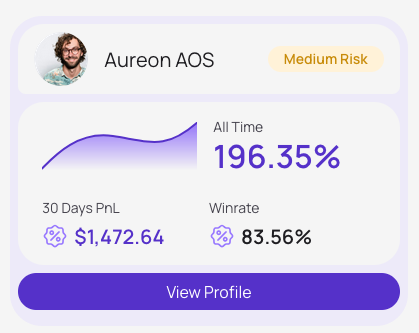
What Is Copy Trading?
Copy trading allows investors and traders to automatically replicate trades from another trader.
When the trader being followed opens a position, the platform can open a corresponding position in the follower’s account.
The same principle can apply when the original trader closes a position.
Depending on the platform, followers may be able to adjust the amount of capital allocated to a strategy or apply additional risk controls.
The concept is therefore straightforward:
One trader makes the trading decisions. Another account automatically follows them.
But simplicity should not be confused with low risk.
How Does Copy Trading Work?
The process usually starts with a marketplace or selection of traders.
Users can review different strategies and traders based on available performance information.
Depending on the platform, this may include:
Historical returns.
Drawdown.
Number of trades.
Trading history.
Risk statistics.
Average holding time.
Win rate.
Assets traded.
Once a trader or strategy has been selected, the follower allocates capital.
The platform then replicates the selected trades according to its rules.
The exact mechanics vary between providers.
What Makes the Best Copy Trading Platform?
There is no single platform that is objectively the best for every trader.
The right choice depends on the trader’s goals, risk tolerance, preferred markets and level of experience.
However, several characteristics are particularly important.
A strong copy trading platform should provide:
Transparent performance data
Clear risk information
Reliable trade execution
Reasonable costs
Risk management tools
A broad selection of strategies
Clear information about the traders being followed
The more transparent the platform is, the easier it becomes to evaluate the actual risk.
Don’t Choose a Platform Based on Returns Alone
One of the biggest mistakes in copy trading is sorting traders by performance and simply choosing whoever has generated the highest return.
A strategy that gained 200% may appear far more attractive than one that gained 30%.
But what happened along the way?
Perhaps the first strategy experienced a 70% drawdown.
Perhaps it used extremely high leverage.
Perhaps it took oversized positions.
Perhaps the performance came from a very short period.
A high return without context tells you very little.
Drawdown Is One of the Most Important Metrics
Drawdown measures how far an account or strategy has fallen from a previous peak.
It is one of the most important statistics when evaluating a copy trading strategy.
Imagine two traders.
Trader A generates a 25% return with a 10% maximum drawdown.
Trader B generates a 40% return with a 45% maximum drawdown.
Trader B may look more profitable.
But the risk profile is dramatically different.
For many investors, the first strategy may be much easier to tolerate.
This is why returns should always be evaluated together with risk.
Risk Score and Volatility
Some copy trading platforms provide an overall risk score.
Such scores can be useful as a first filter.
However, traders should not blindly rely on a single number.
Look at the underlying data.
How large are the positions?
How much leverage is used?
How long are trades held?
Does the strategy frequently add to losing positions?
How does the account behave during volatile markets?
A risk score is useful.
Understanding the actual strategy is better.
How Long Has the Trader Been Trading?
Track record length matters.
A trader with three months of impressive performance does not necessarily have a proven strategy.
A longer track record provides more information about how the strategy behaved across different market conditions.
Ideally, traders should look for performance across:
Trending markets.
Sideways markets.
High-volatility periods.
Low-volatility periods.
Major market events.
No track record can guarantee future results.
But a longer history can provide more information for evaluation.
Number of Trades Matters
A strategy that has made five trades cannot be evaluated in the same way as a strategy with 5,000 trades.
The larger the sample size, the more information you have about the strategy’s behavior.
This does not mean that more trades automatically mean better performance.
It means that the statistics become more meaningful when they are based on a sufficiently large sample.
Win Rate Can Be Misleading
A high win rate looks attractive.
But win rate alone says very little.
Imagine a strategy that wins 90% of its trades but loses heavily on the remaining 10%.
It could still be unprofitable.
Another strategy might only win 40% of its trades but make substantially more on winners than it loses on losers.
This is why professional evaluation goes beyond win rate.
Profit Factor
Profit Factor compares gross profits with gross losses.
For example, if a strategy generated €20,000 in gross profits and €10,000 in gross losses, the profit factor would be 2.0.
This can provide more useful information than the win rate alone.
However, Profit Factor should still be viewed alongside drawdown, sample size, costs and market conditions.
What Markets Can You Copy Trade?
Different platforms offer different markets.
Depending on the provider, copy trading may include:
Forex.
Gold.
Indices.
Stocks.
Cryptocurrencies.
Commodities.
Other derivatives.
The available markets matter because different asset classes have different volatility and risk characteristics.
A strategy focused on major Forex pairs can behave very differently from a highly leveraged cryptocurrency strategy.
Copy Trading Forex Strategies
Forex is one of the most common markets for copy trading.
Traders may follow strategies based on:
Trend following.
Breakouts.
Price action.
Swing trading.
Scalping.
Fundamental analysis.
Algorithmic systems.
Before copying a Forex trader, it is important to understand how the strategy manages leverage and losing trades.
A strategy can appear stable during normal market conditions and behave very differently during major economic announcements.
Copy Trading and Gold
Gold is another popular market.
Gold can experience significant price movements around interest-rate decisions, inflation data and major economic events.
A trader who specializes in gold may therefore have a very different risk profile from someone trading major currency pairs.
Do not compare strategies purely based on their percentage returns.
Compare how they generate those returns.
Copy Trading and Indices
Indices such as the Nasdaq or DAX are also frequently used in trading strategies.
Index strategies can range from short-term scalping to multi-day swing trading.
The holding period matters.
A strategy that holds positions for several days may have very different risks from one that opens and closes dozens of positions each day.
Copy Trading Costs
Costs are often overlooked when evaluating copy trading.
Depending on the platform, costs can include:
Trading spreads.
Commissions.
Performance fees.
Management fees.
Overnight financing.
Subscription fees.
Execution costs.
These costs can significantly affect the final return.
A strategy that looks profitable before fees may produce a much smaller net return after all costs are deducted.
Performance Fees
Some copy trading models charge performance fees.
The trader or strategy provider may receive a percentage of the profits generated.
This can create an incentive structure that aligns the provider with performance.
However, the exact fee structure matters.
Check whether fees are charged on gross profits, net profits or according to a high-water-mark principle.
Always understand the fee before allocating capital.
Copy Trading and Leverage
Leverage deserves particular attention.
A trader can generate impressive returns using significant leverage.
But the same leverage can create substantial losses.
If the copied trader uses aggressive leverage, the follower inherits that risk.
This is one reason why simply copying a successful trader without understanding their risk profile can be dangerous.
Can Copy Trading Be Passive Income?
Copy trading is sometimes marketed as passive income.
That description can be misleading.
Even if trades are copied automatically, the follower still has to select the strategy and monitor the account.
Markets change.
Traders change their strategies.
Risk levels can increase.
A previously successful trader can experience a significant drawdown.
Copy trading therefore requires ongoing monitoring.
It may be more automated than manual trading, but it is not risk-free passive income.
Copy Trading vs. Manual Trading
Manual trading means that you make the trading decisions yourself.
Copy trading means that another trader makes those decisions and your account follows them.
Neither approach is automatically better.
Manual trading requires more knowledge and time.
Copy trading can reduce the amount of direct decision-making required.
However, manual traders have greater control over their individual trades.
Copy traders are dependent on the performance and decisions of the trader they follow.
Copy Trading vs. Automated Trading
Copy trading and automated trading are also different.
With copy trading, you follow another trader.
With automated trading, software follows a predefined strategy or algorithm.
An automated system may operate without relying on another individual trader.
Copy trading, by contrast, creates dependence on the person or strategy being copied.
Both approaches have advantages and risks.
How to Choose the Best Copy Trading Platform
Start by defining what you actually need.
Ask yourself:
Which markets do I want to trade?
How much risk am I willing to accept?
How much capital will I allocate?
Do I want short-term or long-term strategies?
How important is transparency?
What fees am I comfortable with?
Does the platform provide independent performance data?
Can I control the amount I allocate?
Can I stop copying at any time?
The answers will help narrow down the right platform.
What to Look for in a Copy Trading Profile
Once you are on a copy trading platform, don’t immediately choose the highest-performing trader.
Instead, investigate the complete profile.
Look at:
Track record.
Maximum drawdown.
Average monthly return.
Number of trades.
Average trade duration.
Leverage.
Trading instruments.
Risk score.
Largest losing trade.
Largest winning trade.
Consistency.
The goal is not to find the trader with the biggest return.
The goal is to find a strategy whose risk and return profile matches your own objectives.
Red Flags in Copy Trading
Several warning signs should make you investigate further.
Extremely high returns over a short period.
Almost no losing trades.
Very high leverage.
Large positions relative to account size.
Frequent averaging down.
Martingale strategies.
No transparent trading history.
Aggressive marketing claims.
Guaranteed returns.
Promises of easy passive income.
None of these factors alone proves that a strategy is fraudulent.
But they can indicate that the risk is significantly higher than the headline performance suggests.
Why Martingale Copy Trading Is Particularly Risky
Martingale systems deserve special attention.
A trader may increase the position size after every loss.
This can produce a high win rate and long periods of apparent stability.
But one prolonged losing sequence can cause a dramatic drawdown.
When copy trading, the follower has limited control over the strategy’s individual decisions.
If the copied trader suddenly increases position sizes, the follower is exposed to the same behavior.
This is why understanding the strategy is more important than simply looking at its historical return.
Diversification in Copy Trading
Some traders choose to copy multiple strategies instead of putting all their capital into one trader.
This can reduce dependence on a single strategy.
However, diversification only helps if the strategies are genuinely different.
Copying five traders who all use highly leveraged Forex strategies may provide less diversification than expected.
Look at the correlation between strategies and markets.
Different names do not automatically mean different risks.
How Much Money Should You Allocate?
There is no universal amount.
The appropriate allocation depends on your financial situation, risk tolerance and overall portfolio.
The important principle is to avoid allocating more capital than you can afford to lose.
Copy trading should never be treated as guaranteed income.
Especially when leverage is involved, losses can occur quickly.
Can You Make Money With Copy Trading?
Yes, it is possible to make money with copy trading.
But it is equally possible to lose money.
The fact that another trader has generated strong returns in the past does not mean those returns will continue.
A successful copy trading approach therefore requires more than finding a trader with a good historical performance.
It requires:
Strategy selection.
Risk management.
Diversification.
Ongoing monitoring.
Realistic expectations.
The Best Copy Trading Platform Is Not the One With the Highest Returns
This is the key takeaway.
There is no universal best copy trading platform.
The best platform is the one that provides the transparency, markets, tools and risk controls that match your requirements.
Likewise, the best trader to copy is not necessarily the one with the highest return.
A strategy with lower returns and controlled drawdowns may be far more suitable than a high-risk strategy with spectacular historical gains.
Risk-adjusted performance matters more than headline returns.
Conclusion: Finding the Best Copy Trading Platform
Copy trading can make access to trading strategies easier and can reduce the amount of manual execution required.
But it does not remove the risks of financial markets.
When choosing the Best Copy Trading Platform, look beyond performance screenshots and marketing promises.
Evaluate the track record, drawdown, trading behavior, leverage, fees, execution and transparency.
Most importantly, understand what you are actually copying.
A strategy that generates high returns through excessive leverage or aggressive position sizing may not be suitable for your risk tolerance.
The best copy trading decision is therefore not about finding the trader who made the most money last year.
It is about finding a platform and strategy that offer a transparent, understandable and sustainable risk-return profile.
Copy intelligently. Understand the risk. And never confuse past performance with a guarantee of future results.
Overview of Topics
- What Is Copy Trading?
- How Does Copy Trading Work?
- What Makes the Best Copy Trading Platform?
- Don’t Choose a Platform Based on Returns Alone
- Drawdown Is One of the Most Important Metrics
- Risk Score and Volatility
- How Long Has the Trader Been Trading?
- Number of Trades Matters
- Win Rate Can Be Misleading
- Profit Factor
- What Markets Can You Copy Trade?
- Copy Trading Forex Strategies
- Copy Trading and Gold
- Copy Trading and Indices
- Copy Trading Costs
- Performance Fees
- Copy Trading and Leverage
- Can Copy Trading Be Passive Income?
- Copy Trading vs. Manual Trading
- Copy Trading vs. Automated Trading
- How to Choose the Best Copy Trading Platform
- What to Look for in a Copy Trading Profile
- Red Flags in Copy Trading
- Why Martingale Copy Trading Is Particularly Risky
- Diversification in Copy Trading
- How Much Money Should You Allocate?
- Can You Make Money With Copy Trading?
- The Best Copy Trading Platform Is Not the One With the Highest Returns
- Conclusion: Finding the Best Copy Trading Platform
- Follow Verified Traders Now
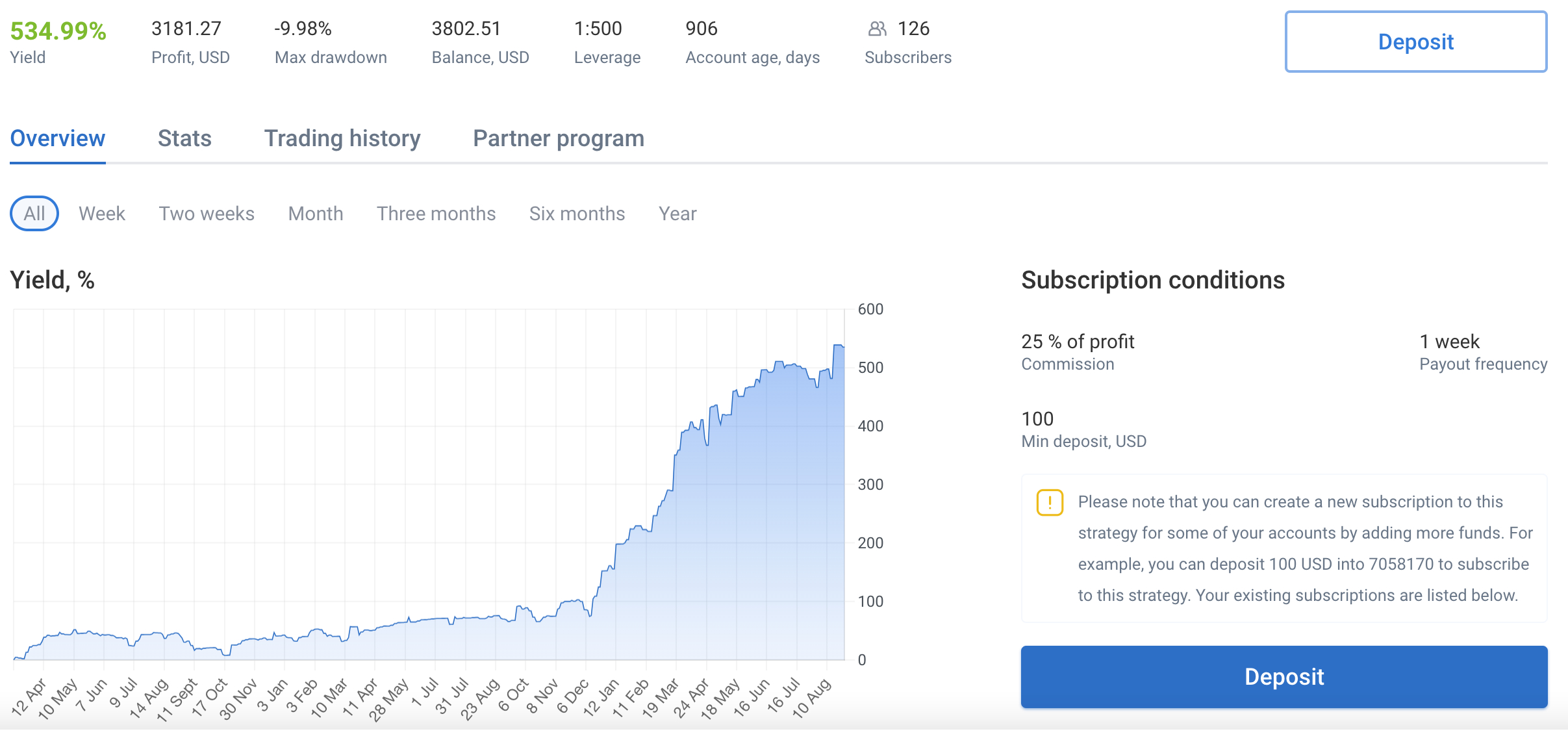
Follow selected strategy providers with transparent performance records and a track record worth looking at.
Follow Verified Traders Now