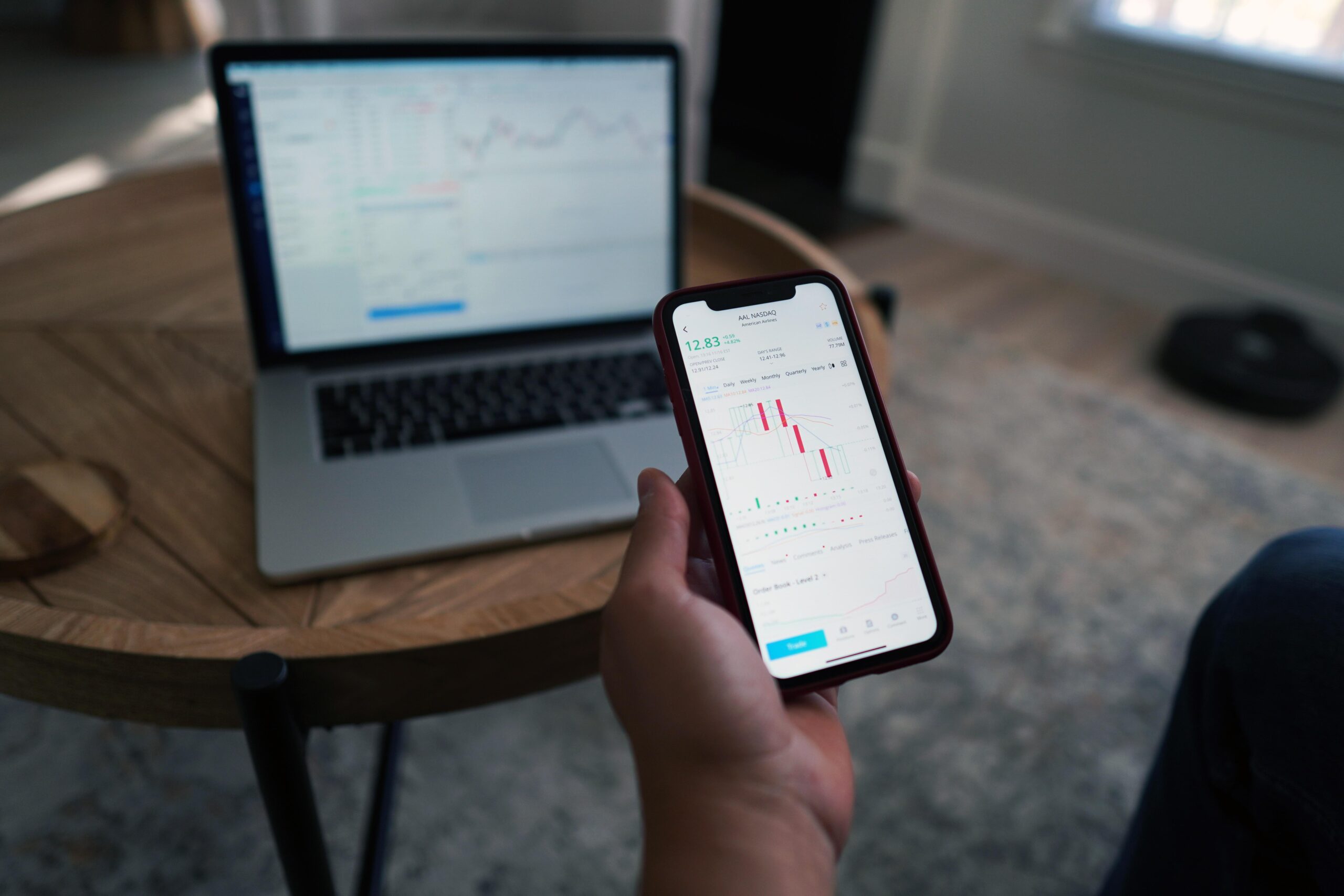
Regulated forex copy trading combines automated trade replication with the regulatory framework of the Forex and CFD industry.
Instead of analyzing every currency pair and placing every trade yourself, you can follow another trader and automatically replicate their positions in your own trading account. The trader might specialize in major currency pairs such as EUR/USD, GBP/USD or USD/JPY, while your account mirrors their trades according to the settings of the copy trading platform.
However, the fact that a service offers copy trading does not automatically mean that it is regulated.
This distinction is extremely important.
A copy trading platform can display trader rankings, historical returns and performance statistics without necessarily being regulated in the same way as a licensed Forex or CFD broker. Likewise, a broker can be regulated while individual copy traders using its platform can still employ highly aggressive strategies.
For this reason, regulated forex copy trading should be evaluated on several different levels: the broker, the legal entity, the regulatory authority, the copy trading service, the trader and the actual risks involved.
What Is Regulated Forex Copy Trading?
Regulated Forex copy trading is a form of copy trading where the relevant trading service is provided through a properly authorised and supervised financial services provider.
The basic process is straightforward.
You:
- Open an account with the provider.
- Deposit funds.
- Select a Forex trader.
- Allocate part of your capital to that trader.
- Activate copy trading.
- The platform replicates eligible trades in your account.
For example, if the trader opens a EUR/USD buy position, your account may automatically open a corresponding position.
The exact mechanism depends on the platform.
Some systems copy positions proportionally according to account size, while others use fixed amounts, lots or configurable risk multipliers.
The regulatory status of the provider is important because your relationship with the broker determines how your account is operated, how funds are handled and which legal protections may apply.
Why Does Regulation Matter in Forex Copy Trading?
Forex and CFD trading involve significant financial risk.
When money is deposited with a broker or financial services provider, you want to know:
- Who operates the account?
- Which legal entity are you contracting with?
- Where is the company authorised?
- Which regulator supervises it?
- How are client funds handled?
- What investor protections apply?
- What leverage restrictions apply?
- What happens if the company becomes insolvent?
Regulation is designed to establish rules around these and other areas.
However, regulation does not mean that your trading strategy will be profitable.
A regulated broker cannot guarantee that the trader you copy will make money.
This distinction should always be clear:
Regulation concerns the provider and its conduct.
Trading performance concerns the strategy and the market.
Regulated Broker vs. Regulated Trader
One of the most common misunderstandings in copy trading is assuming that a trader is regulated simply because the broker is regulated.
These are different things.
A regulated broker may provide a platform where hundreds of traders can be followed.
That doesn’t mean every trader on the platform is individually regulated or professionally authorised.
The broker’s regulatory status primarily concerns the services it provides and the legal entity operating your account.
Therefore, when evaluating a copy trading opportunity, ask:
Who is regulated?
Is it:
- The broker?
- The copy trading platform?
- The investment manager?
- The individual trader?
The answer matters.
How Does Forex Copy Trading Work?
Suppose a trader has a €100,000 account and you have €10,000.
The trader opens a position on EUR/USD worth €20,000.
A proportional copy system might attempt to replicate the same relative exposure in your account.
Your corresponding position could therefore be approximately €2,000, depending on the platform’s calculation method and risk settings.
If the trader closes the position, your corresponding position may also be closed.
However, the results will not necessarily be identical.
Differences can occur because of:
- Spread
- Slippage
- Execution speed
- Liquidity
- Account size
- Position rounding
- Trading costs
- Copy settings
Therefore, don’t assume that your account will reproduce the trader’s published performance exactly.
What Forex Markets Can Be Copy Traded?
Forex copy trading commonly focuses on currency pairs.
These can include:
Major Currency Pairs
- EUR/USD
- GBP/USD
- USD/JPY
- USD/CHF
- AUD/USD
- USD/CAD
- NZD/USD
Minor Currency Pairs
Examples include:
- EUR/GBP
- EUR/CHF
- GBP/JPY
- AUD/JPY
Exotic Currency Pairs
These involve currencies from smaller or emerging markets.
Exotic pairs can have different liquidity characteristics and potentially wider spreads.
The markets available depend on the broker and jurisdiction.
Regulated Forex Copy Trading and Leverage
Leverage is one of the most important concepts in Forex trading.
It allows traders to control a larger position with a smaller amount of capital.
This can increase potential returns.
It can also increase potential losses.
For example, a highly leveraged position can be significantly affected by a relatively small movement in the currency pair.
This is particularly important when copy trading because you are potentially replicating another person’s leverage and position sizing.
A trader who uses aggressive leverage may generate impressive short-term returns.
But the same strategy can experience substantial losses when market conditions change.
Leverage Restrictions
Regulated retail Forex and CFD trading is subject to different requirements depending on the jurisdiction and regulatory authority.
For example, European retail CFD rules introduced leverage limits for different categories of underlying assets, together with other measures designed to reduce the risks of leveraged products.
The exact restrictions depend on the product, client classification and legal entity.
Therefore, don’t assume that every Forex broker offers the same leverage.
A broker regulated in one jurisdiction may have substantially different requirements from another provider operating elsewhere.
What Protection Does Regulation Provide?
Regulation can provide a framework of protections for eligible clients.
Depending on the jurisdiction and provider, these may include requirements concerning:
- Client money
- Financial reporting
- Risk management
- Disclosure
- Leverage
- Marketing
- Complaints
- Best execution
- Conflict management
There may also be compensation or investor protection schemes in certain jurisdictions and circumstances.
But these protections are not identical everywhere.
You need to establish which legal entity holds your account and which regulatory framework applies to you.
Segregated Client Funds
One important concept is the separation of client funds from a firm’s own operating funds.
Under certain regulatory frameworks, authorised firms must follow rules concerning the handling and segregation of client money.
The purpose is to reduce the risk that client funds are treated as the company’s own money.
However, you should never simply assume that a broker’s website statement about “segregated funds” tells you everything you need to know.
Check the legal entity and applicable regulatory requirements.
Negative Balance Protection
Some regulatory frameworks provide negative balance protection for retail CFD clients.
This can limit the client’s losses to the funds in the relevant trading account.
But the exact rules depend on jurisdiction, client classification and product.
It is therefore important to determine whether you are classified as a retail client and which regulatory protections apply to your account.
How to Check Whether a Forex Broker Is Regulated
One of the most important steps is to verify the broker independently.
Don’t rely only on:
- “Regulated” logos
- Website claims
- Social media
- Affiliate reviews
- Trader testimonials
Instead, identify the exact legal entity that will provide the service.
Then check the relevant regulator’s official register.
For example, UK financial firms can be checked through the Financial Conduct Authority’s official register. The FCA also provides warnings concerning firms that may be unauthorised or falsely claim regulatory status.
The same principle applies in other countries.
Always verify the entity rather than simply searching for the brand name.
Why the Legal Entity Matters
Large financial groups may operate several companies in different jurisdictions.
The same brand name can therefore appear across multiple regulatory environments.
For example, a broker may have:
- One European entity
- Another UK entity
- An offshore entity
The conditions and protections may differ between them.
When opening an account, check the actual company named in your client agreement.
That is the entity whose regulatory status matters.
How to Choose a Regulated Forex Copy Trading Provider
Regulation should be your first filter, not your final decision.
After confirming the provider’s regulatory status, investigate the actual copy trading service.
Look at:
Regulatory Status
Is the provider authorised?
Legal Entity
Which company holds your account?
Trading Platform
Which platform is used?
Copy Trading Function
How are trades replicated?
Costs
What spreads, commissions and other fees apply?
Trader Selection
How much information is available about the traders?
Risk Controls
Can you set allocation limits or stop copying?
Transparency
Can you see historical performance and drawdown?
These factors can significantly influence your experience.
How to Choose a Forex Trader to Copy
A regulated broker doesn’t automatically make every strategy suitable.
You still need to evaluate the trader.
Important statistics include:
- Historical return
- Maximum drawdown
- Track record
- Monthly performance
- Win rate
- Average win
- Average loss
- Trading frequency
- Leverage
- Position size
- Current exposure
The goal isn’t to find the trader with the biggest return.
The goal is to understand how the return was generated.
Look at Maximum Drawdown
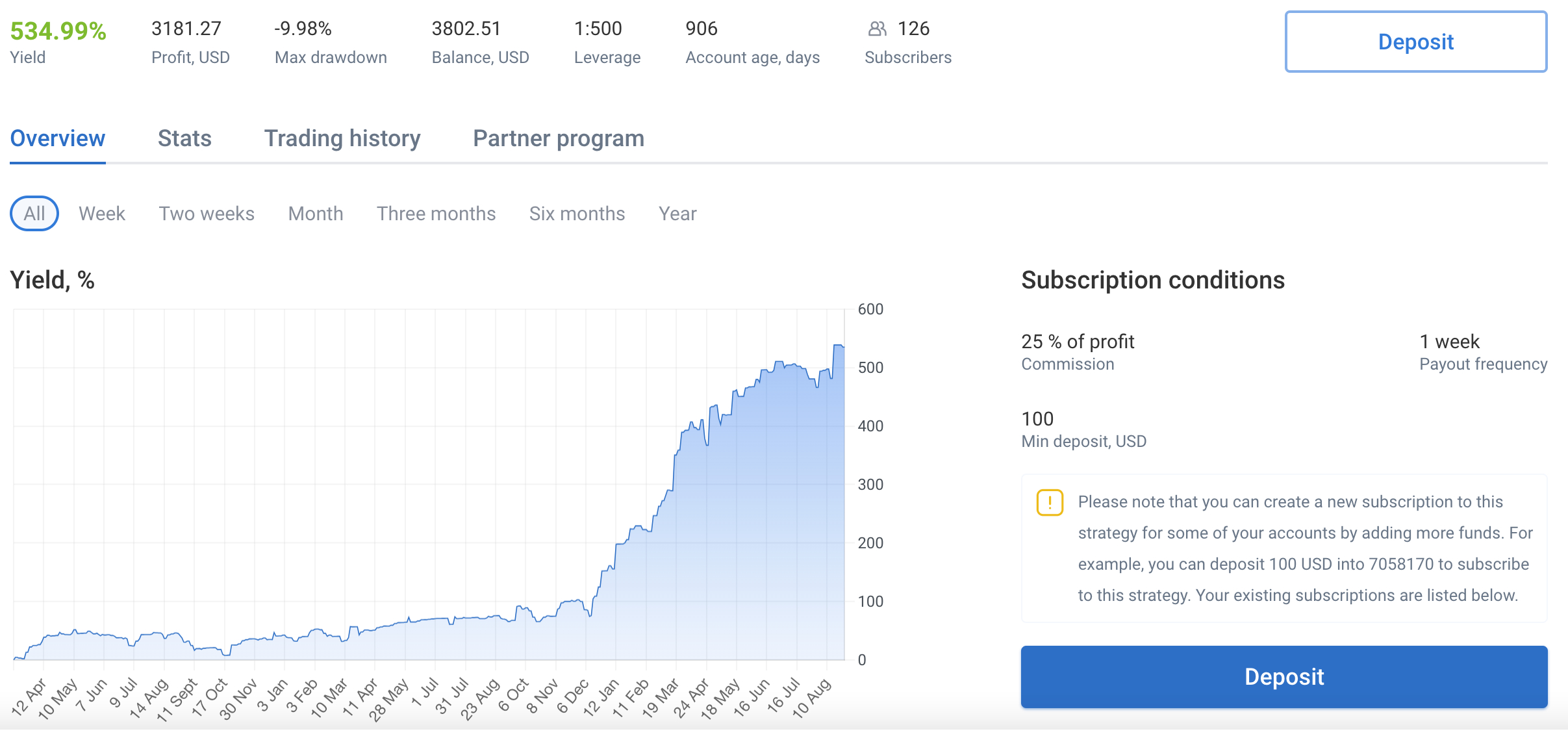
Maximum drawdown is particularly important in Forex copy trading.
Suppose two traders have generated the same historical return.
Trader A
Return: +50%
Maximum drawdown: -8%
Trader B
Return: +50%
Maximum drawdown: -30%
The headline return is identical.
But the risk profile is dramatically different.
Trader B experienced a much larger decline to achieve the same historical result.
For many copy traders, drawdown is therefore more informative than return alone.
Analyze Consistency
A good historical performance should be examined over time.
Look at:
- Monthly returns
- Losing periods
- Recovery periods
- Best month
- Worst month
- Frequency of large losses
A strategy that generates positive returns over a long period with controlled drawdown may provide more useful information than a strategy that generated one spectacular month.
Don’t Chase the Highest Return
Leaderboards are designed to make comparison easy.
But they can also encourage investors to chase performance.
A trader who recently generated +100% may suddenly appear at the top.
That doesn’t necessarily mean the trader is the best option.
The performance might have resulted from:
- High leverage
- Concentrated exposure
- An unusually strong market trend
- Large position sizes
- A short-term strategy
Before copying a trader, investigate the risk behind the return.
Check the Trader’s Strategy
Try to understand what the trader actually does.
Possible strategies include:
- Trend following
- Breakout trading
- Swing trading
- Scalping
- Momentum trading
- Mean reversion
- News trading
- Algorithmic trading
Each strategy behaves differently.
A scalper may generate many small trades.
A swing trader may hold positions for several days.
A trend-following trader may tolerate losing trades while waiting for larger movements.
Knowing the strategy helps you understand the historical statistics.
Beware of Martingale Strategies
Martingale is a particularly important risk factor.
The trader increases position size after losing trades.
This can create a high historical win rate.
But it can also produce very large losses during an extended losing sequence.
When analyzing Forex copy traders, look for:
- Increasing lot sizes after losses
- Multiple positions in the same direction
- Aggressive averaging
- Increasing exposure during drawdowns
A strategy can look extremely profitable until market conditions expose its weaknesses.
Grid Trading and Forex Copy Trading
Grid trading involves placing multiple orders at different price levels.
It can work well during certain range-bound conditions.
However, strong directional moves can result in numerous positions accumulating in the same direction.
This can create substantial floating losses.
If a trader uses a grid system, look carefully at:
- Maximum position count
- Maximum exposure
- Stop-loss rules
- Leverage
- Historical drawdown
Never assume that a high win rate means a low-risk strategy.
Forex Copy Trading Costs
Your actual return can be significantly different from the trader’s published return because of trading costs.
Potential costs include:
Spread
The difference between bid and ask prices.
Commission
Some account types charge a separate commission.
Overnight Financing
Positions held overnight may incur financing costs.
Currency Conversion
If your account currency differs from the trading instrument or fee currency, conversion costs may apply.
Performance Fees
Some copy trading services may charge performance-based fees.
Always check the fee structure before copying a trader.
Slippage in Regulated Forex Copy Trading
Slippage occurs when your order executes at a different price from the expected price.
It can become particularly relevant during:
- Major economic announcements
- Interest-rate decisions
- Employment reports
- Unexpected geopolitical events
- Low-liquidity periods
When copying trades, the original trader may receive a slightly different execution price than you.
This means your performance can differ even when the same trade is copied.
Scalping and Copy Trading
Scalping can be particularly sensitive to execution differences.
If a trader holds positions for only a few minutes, a small difference in:
- Spread
- Entry price
- Exit price
- Slippage
can have a meaningful impact.
Therefore, if you’re considering a Forex scalper, investigate the broker’s execution conditions and the historical trading style carefully.
Swing Trading and Copy Trading
Swing trading can be less sensitive to small execution differences because positions are typically held longer.
However, swing traders can have significant overnight and weekend exposure.
Currency markets can move sharply following:
- Central bank decisions
- Economic data
- Political developments
- Unexpected market events
Therefore, longer holding periods don’t automatically mean lower risk.
Can Regulated Forex Copy Trading Be Profitable?
It can be.
But regulation does not create profitability.
A regulated broker provides a framework within which the trading service operates.
The profitability of your copy trading account depends on:
- The trader you select
- Market conditions
- Position sizing
- Leverage
- Trading costs
- Execution
- Risk management
- Your allocation
Past performance cannot guarantee future results.
Is Regulated Forex Copy Trading Safe?
“Regulated” and “safe” should not be treated as synonyms.
Regulation can provide important protections and oversight.
But Forex trading remains risky.
A regulated broker can still provide access to leveraged products.
A regulated copy trading platform can still contain traders who lose money.
A verified trader can still experience a large drawdown.
Therefore, regulation should be viewed as an important layer of protection, not a guarantee against investment losses.
Regulated Forex Copy Trading vs. Unregulated Platforms
The difference can be significant.
| Factor | Regulated Provider | Unregulated Provider |
|---|---|---|
| Regulatory supervision | Yes | No or unclear |
| Client money rules | May apply | Unclear |
| Leverage restrictions | May apply | Potentially different |
| Formal complaints process | Usually available | May be limited |
| Regulatory register | Verifiable | None |
| Investor protections | May apply | Often limited or unclear |
| Risk disclosure | Regulatory requirements may apply | Variable |
This doesn’t mean every unregulated business is fraudulent.
But the absence of regulatory oversight means you may have fewer protections and less independent supervision.
Red Flags When Choosing a Copy Trading Provider
Be particularly cautious if a platform:
- Promises guaranteed profits
- Claims there is no risk
- Uses unusually high return claims
- Pressures you to deposit immediately
- Refuses to identify the legal entity
- Provides no verifiable regulatory information
- Offers extremely high leverage without clear explanation
- Uses anonymous traders without transparent performance data
- Makes withdrawals unnecessarily difficult
- Relies heavily on lifestyle marketing
A legitimate provider should be able to explain clearly who operates the service and under which regulatory framework.
Don’t Confuse Regulation With Performance Verification
These concepts should always be separated.
Regulation: Who supervises the financial services provider?
Verification: How reliable is the trading performance information?
You ideally want transparency on both.
A regulated broker with poor trader information isn’t necessarily a good copy trading solution.
Likewise, a platform showing verified traders isn’t automatically a regulated broker.
A Practical Checklist for Regulated Forex Copy Trading
Before depositing money, work through this checklist.
1. Identify the Legal Entity
Find the exact company you will contract with.
2. Verify Regulation
Check the entity in the relevant regulator’s official database.
3. Understand the Product
Know whether you are trading Forex CFDs or another derivative.
4. Check Leverage
Understand the maximum and typical leverage.
5. Review Fees
Check spreads, commissions, financing and other charges.
6. Analyze the Trader
Review track record, returns and drawdown.
7. Understand the Strategy
Know whether the trader scalps, swings, trends or uses another method.
8. Check Current Exposure
Review open positions and current drawdown where available.
9. Look for Risky Behavior
Watch for martingale, grid trading and aggressive averaging.
10. Understand the Copy Settings
Know how position sizes are calculated and whether risk can be adjusted.
How Much Should You Allocate?
There is no universal percentage that is appropriate for everyone.
Your allocation should depend on:
- Total available capital
- Personal risk tolerance
- Trader volatility
- Maximum historical drawdown
- Overall portfolio exposure
It can be useful to think in terms of maximum acceptable loss rather than simply choosing an arbitrary allocation.
For example, if a strategy has historically experienced a 15% drawdown, you should consider whether you could tolerate a significantly larger drawdown in the future.
Historical maximum drawdown can be exceeded.
Diversifying Regulated Forex Copy Trading
Some investors choose multiple traders to diversify their exposure.
For example:
- One EUR/USD specialist
- One multi-currency trader
- One trend-following strategy
- One lower-frequency swing trader
But diversification should be based on actual differences in strategy and market exposure.
Four traders who all trade EUR/USD in the same direction aren’t necessarily diversified.
What Should You Monitor After Starting?
Copy trading doesn’t mean you should forget about the account.
Review periodically:
- Performance
- Drawdown
- Leverage
- Strategy changes
- Position sizes
- Market exposure
- Trading frequency
If a trader suddenly changes their strategy, you should reassess whether the original reason for copying them still applies.
Conclusion: Regulated Forex Copy Trading
Regulated forex copy trading can provide a structured way to automatically follow Forex traders while benefiting from the regulatory framework of an authorised financial services provider.
But regulation should never be confused with profitability or safety.
The first step is to verify the exact legal entity behind the broker or copy trading service and confirm its regulatory status independently.
After that, you still need to evaluate the trader.
Look at the track record, maximum drawdown, consistency, leverage, position sizing, strategy and current exposure. Be especially cautious with strategies involving martingale, aggressive averaging or excessive leverage.
You should also understand the costs involved. Spreads, commissions, overnight financing, currency conversion and slippage can all affect your actual results.
Most importantly, remember that a regulated broker does not guarantee the performance of a copy trader.
The real benefit of regulation is that it can provide greater transparency, oversight and potentially important client protections. The trading risk remains.
The best approach is therefore to combine broker regulation, transparent trader performance and disciplined risk management rather than relying on any single factor.
If you are considering regulated Forex copy trading, don’t ask only:
“Is this broker regulated?”
Also ask:
“Who exactly is regulated, what protections apply to my account, how does the copy system work, and what risk is the trader taking to generate these returns?”
Those questions provide a much stronger foundation for evaluating a copy trading service.
Overview of Topics