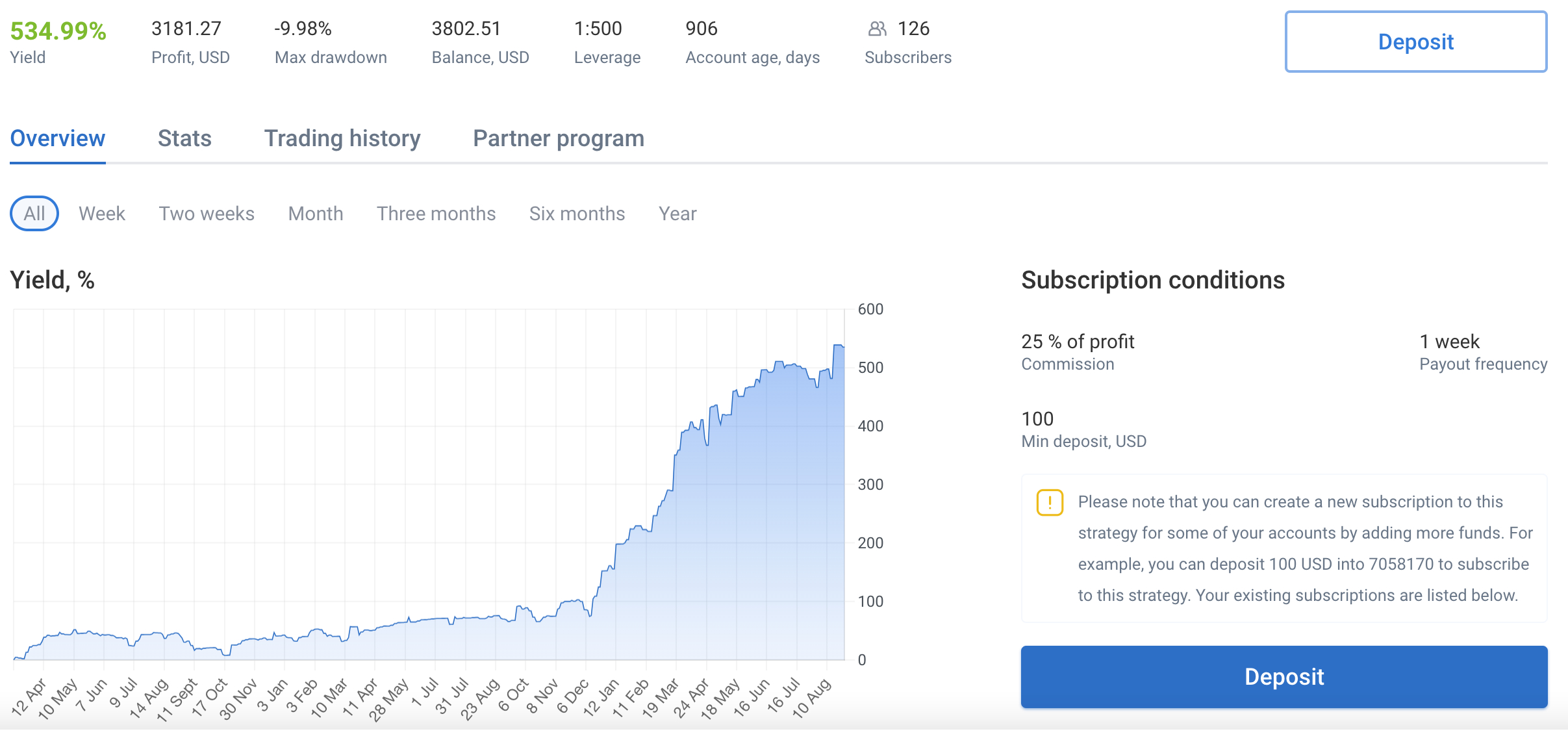
If you are wondering how to start copy trading, the technical process is usually much easier than learning how to trade the financial markets yourself. You select a broker or copy trading platform, find a trader or strategy, decide how much capital you want to allocate and activate the copying function.
But the simplicity of the technology can be misleading.
Starting copy trading takes only a few minutes on many platforms. Starting copy trading responsibly requires considerably more research.
The most important decision is not which button to click. It is choosing the right broker, understanding the strategy you are copying and deciding how much risk you are actually prepared to take.
A trader with impressive historical returns can still experience substantial losses. Likewise, a strategy with moderate returns and controlled drawdowns may be much more suitable for someone looking for a long-term approach.
This guide explains how to start copy trading step by step, what to look for when choosing a broker and strategy, how much money to allocate and which mistakes you should avoid.

What Do You Need to Start Copy Trading?
Before you start, you generally need four things:
- A copy trading broker or platform
- A verified trading account
- Capital to allocate
- A trader or strategy you want to copy
Depending on the provider and your country, you may also need to meet specific eligibility requirements.
The first step should always be checking whether the broker is regulated and available in your jurisdiction.
Don’t choose a platform simply because it shows traders with impressive returns.
The broker itself needs to be evaluated independently from the strategy provider.
Step 1: Choose a Copy Trading Broker
The first decision is where you will copy trades.
There are several different approaches to copy trading.
Some platforms have copy trading built directly into their ecosystem. Others offer copy trading through established trading platforms such as MetaTrader or cTrader.
When comparing brokers, don’t focus only on whether copy trading is available.
Look at the entire trading environment.
Regulation
Check which company will actually hold your account and which regulator supervises that entity.
This is particularly important with international brokers because the same brand can operate through different legal entities in different countries.
Trading Costs
Copy trading can involve several different costs:
- Spreads
- Commissions
- Overnight financing
- Performance fees
- Strategy fees
- Other platform charges
A strategy that looks highly profitable before costs may produce a significantly different result after trading expenses.
Available Markets
What do you want to trade?
Depending on the platform, you may find copy trading strategies focused on:
- Forex
- Gold
- Indices
- Stocks
- Commodities
- Cryptocurrencies
Make sure the broker offers the markets and instruments you are interested in.
Copy Trading Features
A good platform should provide enough information to evaluate strategy providers.
Useful features include:
- Historical performance
- Maximum drawdown
- Risk statistics
- Trading history
- Number of followers
- Strategy description
- Position information
- Capital allocation controls
- Stop-loss or drawdown protection
The more transparent the platform is, the easier it is to make an informed decision.
Step 2: Open a Trading Account
Once you’ve chosen a suitable broker, open your account.
The process usually involves providing personal information and completing identity verification.
Depending on your jurisdiction and the broker, you may need to provide documents such as identification and proof of address.
Once your account has been approved, you can deposit funds.
Before depositing a large amount, however, it can be sensible to become familiar with the platform first.
Learn where you can:
- Find strategy providers
- Change your allocation
- Stop copying
- Close positions
- Set risk limits
- Withdraw funds
- View trading history
Knowing how the platform works before committing significant capital can prevent unnecessary mistakes.
Step 3: Decide How Much Money to Use
This is one of the most important decisions when you start copy trading.
You don’t need to allocate your entire account to one trader.
In fact, concentrating your entire capital in one strategy can create unnecessary risk.
For example, suppose you have $10,000 available.
You might decide to allocate only $2,000 to a particular copy trading strategy and keep the rest unallocated or use it for other investments.
The exact allocation should depend on your personal financial situation and risk tolerance.
The basic rule is:
Never use money for copy trading that you cannot afford to lose.
Copy trading does not eliminate the possibility of substantial losses.
Step 4: Find Traders to Copy
Now comes the most important part: selecting a strategy provider.
Most copy trading platforms provide a list or marketplace of traders.
You may see rankings based on:
- Return
- Risk
- Number of followers
- Assets under management
- Trading frequency
- Historical performance
Don’t automatically choose the trader at the top.
A leaderboard can be useful for finding candidates, but it should not be your final decision-making tool.
The trader with the highest return may also have the highest risk.
Instead, create a shortlist of several traders and analyze them individually.
Step 5: Check the Trader’s Track Record
Before copying a trader, look at how long they have been active.
A strategy with only a few months of history doesn’t tell you much about how it will perform during different market conditions.
Ideally, you want to see how the trader performed during:
- Strong trends
- Sideways markets
- High volatility
- Low volatility
- Major economic events
- Market corrections
A longer track record doesn’t guarantee future success, but it gives you more information to work with.
Step 6: Analyze the Maximum Drawdown
One of the most important numbers when evaluating a copy trader is maximum drawdown.
Imagine that a trader starts with $10,000.
The account grows to $14,000.
It then falls to $10,500 before recovering.
The trader has experienced a substantial drawdown from the previous high.
Now imagine that you had allocated $5,000 to that strategy.
Your account could also experience a significant temporary loss.
Ask yourself:
Could I tolerate that drawdown without panicking and stopping the strategy at the worst possible moment?
If the answer is no, the trader may not be suitable for you.
Step 7: Look at Risk, Not Just Returns
This is where many beginners make their first major mistake.
They see:
+85% return
and immediately think:
“That’s the trader I want.”
But returns without context tell you very little.
You need to know how the return was generated.
A trader could produce 85% by taking relatively moderate risk.
Another trader could produce the same return using extreme leverage and aggressive position sizing.
Those are completely different strategies.
Look at:
- Maximum drawdown
- Leverage
- Position sizes
- Risk per trade
- Trading frequency
- Average holding period
- Losing streaks
- Account volatility
The best strategy for you isn’t necessarily the strategy with the highest return.
Step 8: Understand the Trading Strategy
You don’t have to become an expert in the trader’s strategy, but you should understand the basic concept.
For example, is the trader:
Scalping?
Positions may remain open for only seconds or minutes.
This can make execution and spread costs particularly important.
Day Trading?
Positions are generally opened and closed within the same trading day.
Swing Trading?
Positions may remain open for several days or weeks.
Position Trading?
Trades may remain open for much longer periods.
News Trading?
The trader may intentionally trade around economic announcements and major market events.
Every style has a different risk profile.
Choose a strategy that matches your expectations.
Step 9: Check Leverage and Position Sizing
Leverage deserves special attention when you start copy trading.
A trader may have an impressive return because they are taking very large positions relative to their account.
That can work during favorable market conditions.
It can also result in rapid losses.
Look at the typical position sizes of the trader you want to copy.
If the strategy regularly uses a large percentage of available margin, you should understand exactly what that means for your account.
A strategy that uses excessive leverage may not be appropriate simply because it has performed well historically.
Step 10: Decide Whether to Copy One or Multiple Traders
Many copy trading platforms allow you to follow multiple traders.
This can potentially diversify your portfolio.
For example, instead of putting $5,000 into one trader, you could allocate:
- $2,000 to a Forex strategy
- $1,500 to an index strategy
- $1,000 to a gold strategy
- $500 to another strategy
However, diversification isn’t automatically achieved just because you copy multiple people.
If all four traders use similar strategies and trade the same markets, they may all lose money at the same time.
Look at the actual correlation between strategies rather than simply counting the number of traders.
Step 11: Activate Copy Trading
Once you’ve selected your trader and decided how much capital to allocate, you can activate copying.
The platform will then replicate eligible trades according to its rules.
Depending on the provider, you may be able to choose settings such as:
- Copy amount
- Copy ratio
- Maximum drawdown
- Stop-loss
- Maximum position size
Read the platform’s documentation carefully before activating the strategy.
You need to know what happens when the trader opens a new position, adds to an existing position or closes a trade.
Step 12: Monitor Your Copy Trading Account
Copy trading is automated, but it shouldn’t be completely ignored.
You should regularly check whether the strategy is still behaving as expected.
Monitor:
- Performance
- Drawdown
- Trading frequency
- Open positions
- Risk
- Leverage
- Strategy changes
You should also monitor the trader’s behavior.
Imagine you selected a conservative swing trader.
After several months, the trader suddenly starts scalping with significant leverage.
The strategy you originally selected has effectively changed.
That could be a reason to reconsider your allocation.
When Should You Stop Copying a Trader?
There is no universal rule for when you should stop.
However, several situations should make you investigate further.
For example:
- The trader changes their strategy significantly
- Risk increases dramatically
- Drawdown exceeds your acceptable level
- The trader starts using excessive leverage
- Trading frequency changes significantly
- The strategy no longer matches your objectives
- You no longer understand or accept the risk
Don’t stop copying simply because of one losing trade.
Losses are a normal part of trading.
Instead, look at whether the trader’s overall behavior has changed.
How Much Should You Invest in Copy Trading?
There is no universally correct amount.
Your allocation should depend on your:
- Financial situation
- Risk tolerance
- Investment horizon
- Trading experience
- Overall portfolio
- Ability to tolerate losses
Starting with a smaller amount can help you understand how the system behaves before you increase your exposure.
For example, if a strategy has historically experienced a 15% drawdown, you need to understand that a similar drawdown could occur in your account.
If you allocate $1,000, a 15% drawdown would represent approximately $150.
If you allocate $20,000, the same percentage represents approximately $3,000.
The percentage may be identical, but the psychological impact is very different.
What Are the Costs of Copy Trading?
Before starting copy trading, understand the complete cost structure.
Depending on the broker, costs can include:
Spreads
The difference between the buy and sell price.
Commission
Some brokers charge a commission on certain instruments.
Overnight Financing
Positions held overnight may incur financing costs.
Performance Fees
Some strategy providers may receive a percentage of profits.
Platform Fees
Certain copy trading services may charge additional fees.
Always compare the costs before selecting a strategy.
A strategy with a high historical return can become considerably less attractive if it also has high costs.
Common Copy Trading Mistakes
Choosing the Highest Return
This is probably the most common mistake.
A high return doesn’t tell you how much risk was required to achieve it.
Ignoring Drawdown
A trader can generate significant profits and still experience enormous temporary losses.
Always check drawdown.
Investing Too Much
Don’t put all your capital into one strategy.
Ignoring Leverage
High leverage can amplify losses very quickly.
Copying Too Many Traders
More traders don’t automatically mean more diversification.
Not Monitoring the Strategy
A trader’s behavior can change.
Chasing Recent Performance
A strategy that performed exceptionally well recently may simply have benefited from favorable market conditions.
Can You Learn Trading Through Copy Trading?
Yes, copy trading can potentially be used as a learning tool.
By observing experienced traders, you can study:
- Entry timing
- Position sizing
- Risk management
- Trade duration
- Market selection
- Stop-loss placement
- Trading psychology
However, simply copying someone doesn’t teach you why they made a particular decision.
If your long-term goal is to become an independent trader, you should continue learning and analyzing the markets yourself.
Copy trading can complement trading education, but it doesn’t replace it.
Is Copy Trading a Good Idea for Beginners?
It can be, provided that beginners understand the risks.
The biggest advantage is convenience.
You don’t need to spend hours every day analyzing charts or manually executing trades.
The biggest disadvantage is that you are relying on another trader’s decisions.
This means you need to be comfortable with the strategy before copying it.
Don’t start because someone promises easy money.
Start because you have researched the strategy and understand the risks involved.
How to Start Copy Trading: A Simple Checklist
Before activating your first copy trading strategy, ask yourself:
- Is the broker properly regulated?
- Do I understand the trading costs?
- How long has the trader been active?
- What is the maximum drawdown?
- How much leverage does the strategy use?
- What markets does the trader trade?
- How frequently do they trade?
- How much capital will I allocate?
- Can I tolerate the historical drawdown?
- What happens if the strategy changes?
- How can I stop copying?
- What happens to open positions when I stop?
- Am I using money I can afford to lose?
If you cannot answer these questions, you probably aren’t ready to allocate significant capital yet.
Conclusion: How to Start Copy Trading
Learning how to start copy trading is relatively simple. The technical process usually involves opening a suitable trading account, depositing funds, selecting a trader, allocating capital and activating the copy function.
The difficult part is making good decisions before you start.
Choosing a trader based solely on their historical return can be a costly mistake. Instead, examine the complete strategy, including its track record, maximum drawdown, leverage, position sizing, trading style and consistency.
You should also choose your capital allocation carefully. Copying several traders can provide diversification, but only if their strategies are genuinely different.
Most importantly, remember that copy trading doesn’t remove market risk. It simply automates the execution of another trader’s decisions.
A disciplined approach therefore starts with research, not with the “Copy” button.
Choose the broker carefully, understand the strategy, control your risk and never allocate more capital than you can afford to lose.
Overview of Topics