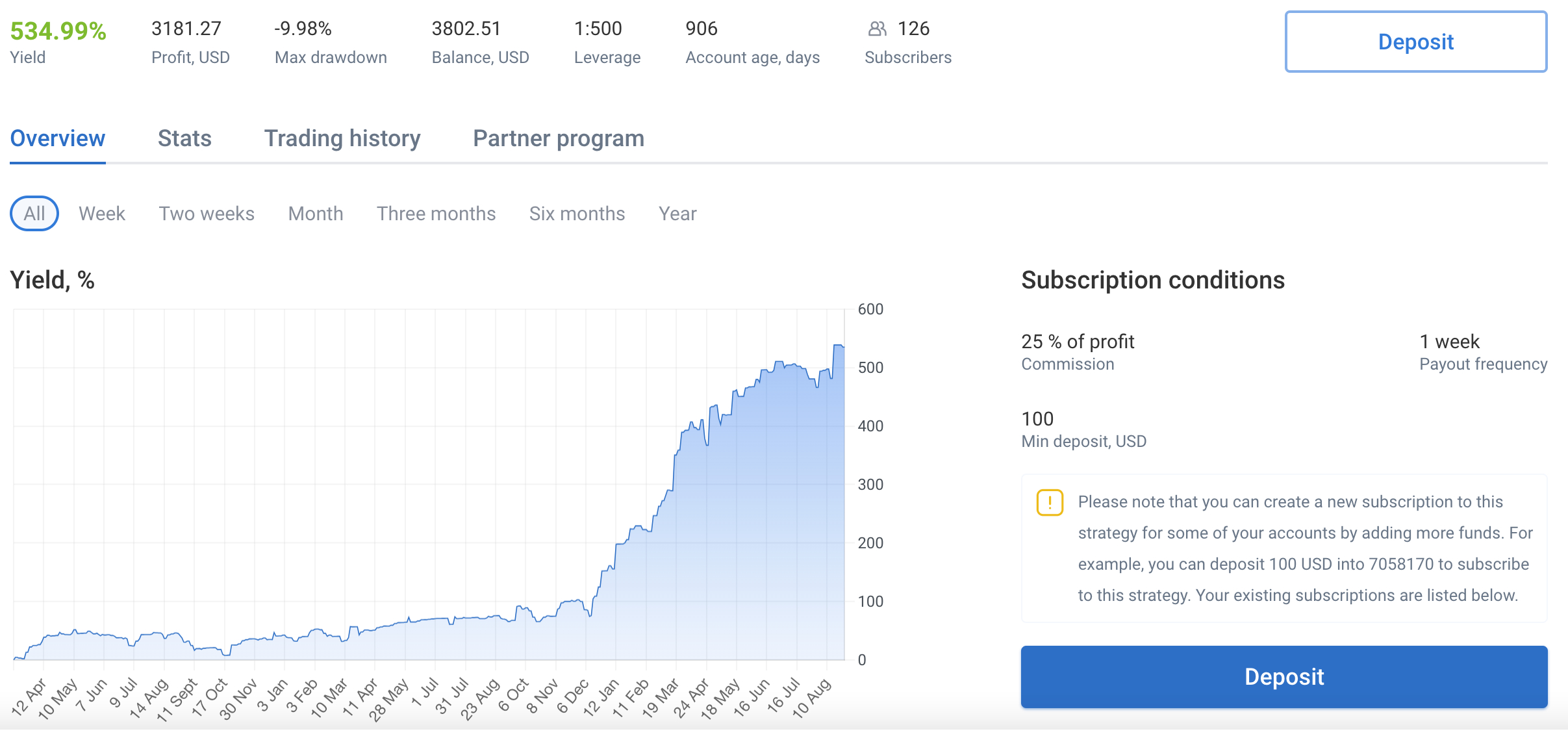
Copy trading with CFDs combines two concepts that have become increasingly popular among retail traders: copy trading and contracts for difference (CFDs).
Copy trading allows you to automatically replicate the trades of another trader in your own trading account. CFDs, meanwhile, allow traders to speculate on the price movements of financial instruments without directly owning the underlying asset.
This combination can provide access to markets such as Forex, indices, commodities, shares and other instruments through a single trading account.
However, there is an important difference between copy trading with CFDs and traditional investing.
When you copy a CFD trader, you are not simply buying and holding an asset. You are potentially entering leveraged derivative positions, meaning relatively small market movements can have a significant impact on your account.
This makes the selection of the trader, the broker and the risk settings particularly important.
Before starting, it is therefore worth understanding exactly how CFD copy trading works, what leverage and margin mean, which costs can apply and what risks you should consider.
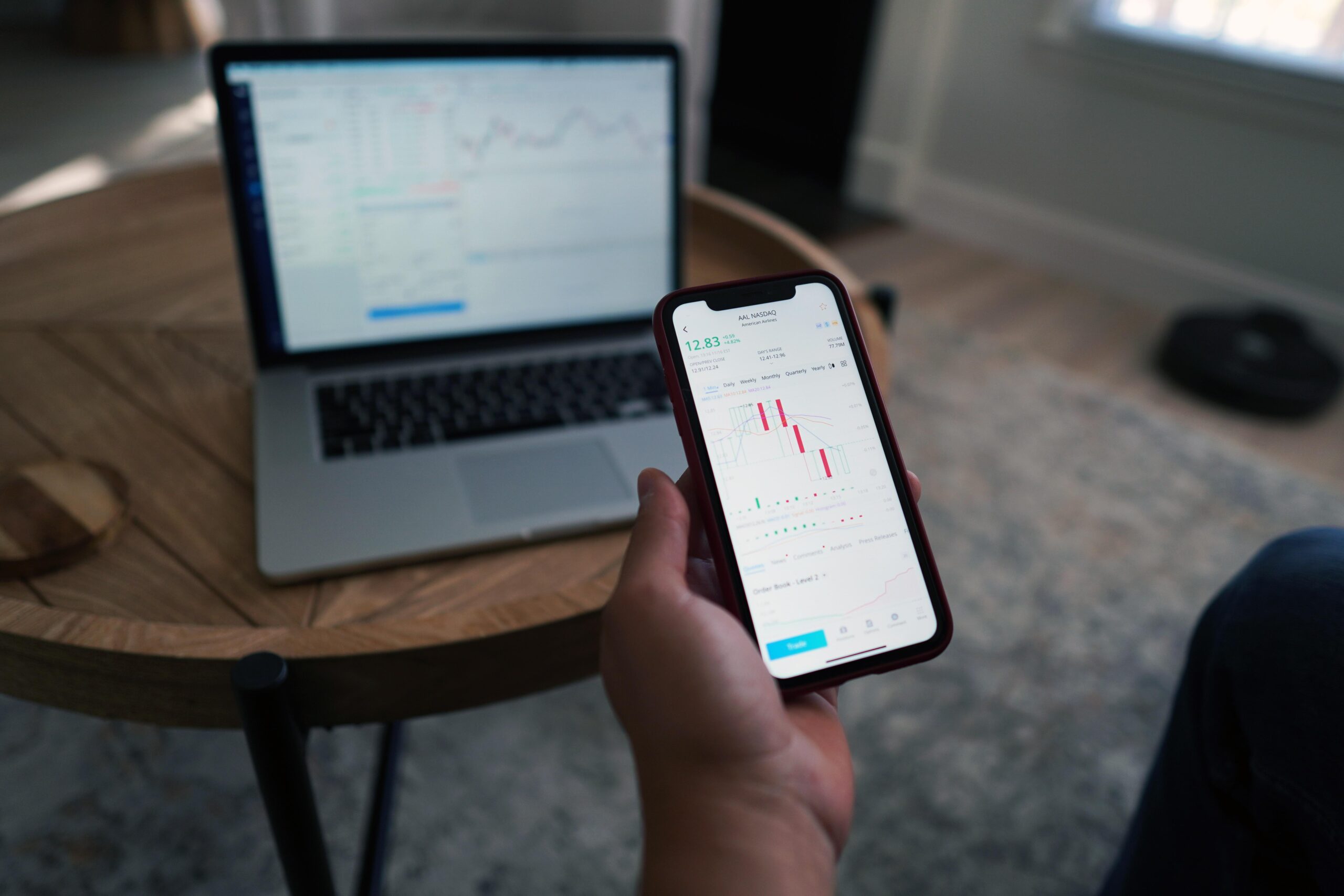
What Are CFDs?
CFD stands for Contract for Difference.
A CFD is a derivative that allows traders to speculate on whether the price of an underlying market will rise or fall without owning the underlying asset itself.
Depending on the broker, CFDs can be available on markets such as:
- Forex
- Stock indices
- Individual shares
- Commodities
- Gold
- Oil
- Cryptocurrencies
- Other financial instruments
For example, instead of purchasing physical gold, a trader could open a CFD position based on the price of gold.
If the price moves in the trader’s anticipated direction, the position can generate a profit.
If the market moves against the position, it generates a loss.
The important point is that you don’t own the underlying asset simply because you trade a CFD on it.
How Does Copy Trading With CFDs Work?
The process is relatively straightforward.
First, you open a trading account with a broker or copy trading platform that supports CFD trading.
You then select a trader whose strategy you want to follow.
Once copying is activated, the platform attempts to replicate that trader’s CFD trades in your account.
For example:
A trader opens:
Buy NASDAQ CFD
Your account may automatically open a corresponding NASDAQ CFD position based on your chosen allocation or copy settings.
If the trader later closes the position, your corresponding position may also be closed.
The exact mechanics depend on the platform.
Copying can be based on:
- Fixed position sizes
- Proportional allocation
- Percentage of equity
- Risk-based settings
- Other platform-specific parameters
Because execution conditions can differ, your results may not be identical to those of the trader you copy.
Why Are CFDs Popular for Copy Trading?
CFDs provide access to a wide range of markets.
A single CFD trading account can potentially offer exposure to:
Forex
Currency pairs such as EUR/USD or GBP/USD.
Indices
Markets such as the DAX, S&P 500 or Nasdaq.
Commodities
Including gold and oil.
Shares
Depending on the broker and jurisdiction.
This broad market access makes CFDs suitable for many different trading strategies.
A copy trader might specialize in gold, another in indices and another in Forex.
You can then potentially choose strategies based on your preferred markets and risk profile.
Copy Trading With CFDs and Leverage
One of the most important concepts to understand is leverage.
CFDs are commonly traded with leverage.
Leverage allows you to control a larger position with a smaller amount of capital.
For example, with 10:1 leverage, $1,000 of margin could provide exposure to a position worth approximately $10,000, subject to the broker’s rules and applicable regulations.
This can magnify potential returns.
But it also magnifies potential losses.
A relatively small market movement against a leveraged position can therefore produce a significant percentage loss on the capital allocated to the trade.
This is one of the main reasons CFD copy trading should not be treated as passive investing.
Why Leverage Matters When Copying Traders
Suppose you copy two traders.
Trader A
Uses moderate leverage.
Trader B
Uses very high leverage.
Both generate a historical return of +30%.
The headline performance looks identical.
But the underlying risk is very different.
Trader B may experience much larger losses if the market moves unexpectedly.
When evaluating CFD copy traders, don’t just look at the return.
Check:
- Leverage
- Position size
- Margin usage
- Maximum drawdown
- Market exposure
The way a trader generates a return can be more important than the return itself.
What Is Margin in CFD Copy Trading?
Margin is the amount of capital required to open and maintain a leveraged CFD position.
For example, if a broker requires 10% margin for a particular position, a $10,000 position might require $1,000 of margin.
The exact requirements depend on the instrument, broker and applicable regulations.
Margin is important because losses reduce your available equity.
If your account no longer has sufficient margin to support open positions, the broker may close some or all positions according to its margin rules.
This can happen particularly quickly when markets move sharply.
Copy Trading Can Multiply Exposure
An important point is that copying a trader doesn’t eliminate leverage risk.
It can potentially replicate it.
If the trader opens several highly leveraged positions, your account may also accumulate significant exposure.
This means you need to consider:
How much capital am I allocating to this trader?
rather than only:
How much does the trader usually make?
A strategy that is appropriate for a large account may not be appropriate when copied with a smaller account and aggressive allocation.
Example of CFD Copy Trading
Imagine you have a copy trading account with:
€10,000
You allocate 20% to a CFD trader.
Your initial allocation is therefore:
€2,000
The trader opens a position using leverage.
The position moves 5% in the trader’s favor.
Depending on the leverage, position sizing and copying mechanism, the return on your allocated capital could be significantly different from 5%.
The same applies to losses.
If the trader’s position moves sharply against them, your copied position can also lose money.
This is why you should understand the platform’s copy ratio and risk settings before starting.
Copy Ratio and Position Sizing
Different platforms use different methods to determine how much of each trade is copied.
One common approach is proportional copying.
For example:
The trader has €100,000.
You allocate €5,000.
The platform may attempt to replicate positions proportionally to your account.
But other platforms may use:
- Fixed lots
- Fixed amounts
- Percentage allocation
- Risk multipliers
A risk multiplier can be particularly important.
If the platform allows you to copy a trader at 2× risk, you could potentially double the exposure relative to the original strategy.
Always understand how the platform calculates copied positions.
CFD Copy Trading Costs
Copy trading with CFDs isn’t free.
Depending on the broker and platform, you may encounter:
- Spreads
- Commissions
- Overnight financing
- Conversion fees
- Platform fees
- Performance fees
- Withdrawal fees
- Other account-related costs
These costs can significantly affect long-term performance.
Spreads
The spread is the difference between the bid and ask price.
You effectively pay this trading cost when entering and exiting positions.
Commission
Some CFD brokers charge a separate commission, particularly for certain instruments or account types.
Overnight Financing
Holding CFD positions overnight can generate financing charges or credits.
The exact calculation depends on the broker and instrument.
This is particularly relevant for copy traders who hold positions for several days or weeks.
Overnight Costs in CFD Copy Trading
Suppose a copy trader holds a position for one day.
Then another day.
Then another.
If overnight financing applies, the cost can accumulate.
A strategy that looks profitable before financing costs may generate a lower net return after all charges are included.
When evaluating long-term CFD copy traders, therefore consider:
Gross performance
versus
Net performance after trading costs.
Slippage in CFD Copy Trading
Slippage occurs when your trade is executed at a different price than expected.
This can happen during:
- High volatility
- Economic announcements
- Low liquidity
- Rapid market movements
Slippage is particularly relevant for copy trading because there can be a small delay between the original trader’s execution and the follower’s execution.
For longer-term positions, a small difference may have limited impact.
For scalping strategies, it can be much more important.
Copy Trading With CFDs and Scalping
Scalping involves very short-term trades.
A scalper might hold positions for seconds or minutes.
This can make CFD copy trading more sensitive to execution quality.
Suppose the original trader enters at:
1.1000
Your copied position is executed at:
1.1003
If the strategy targets a very small movement, those three points can have a meaningful effect.
Therefore, when copying scalpers, pay particular attention to:
- Spreads
- Execution speed
- Slippage
- Commissions
- Broker liquidity
A strategy that performs well manually may not produce identical results when copied.
Copy Trading With CFDs and Swing Trading
Swing trading can be easier to copy in some circumstances because positions are held longer.
A swing trader may hold a CFD position for:
- Several hours
- Several days
- Several weeks
The impact of a small execution difference may therefore be less significant than with scalping.
However, swing trading introduces other risks.
These include:
- Overnight financing
- Weekend gaps
- Economic announcements
- Unexpected market events
The longer a leveraged position remains open, the more exposure you have to changing market conditions.
Which CFD Markets Can Be Copy Traded?
The available instruments depend on the broker and platform.
Common CFD markets include:
Forex CFDs
Examples include:
- EUR/USD
- GBP/USD
- USD/JPY
Index CFDs
Examples include:
- DAX
- Nasdaq
- S&P 500
- Dow Jones
Commodity CFDs
Examples include:
- Gold
- Silver
- Oil
- Natural gas
Share CFDs
Some brokers provide CFDs on individual companies.
Cryptocurrency CFDs
Availability depends on the broker and jurisdiction.
The fact that an instrument is available doesn’t mean it is suitable for every copy trading strategy.
How to Choose a CFD Copy Trader
Selecting the trader is arguably the most important part of the process.
Don’t choose based solely on return.
Instead, examine:
Track Record
How long has the trader been active?
Maximum Drawdown
How large were historical losses?
Consistency
How stable are returns?
Leverage
How much exposure does the trader use?
Strategy
Is the trader scalping, swing trading, trend following or using another approach?
Position Size
Are positions consistent?
Current Exposure
What trades are open now?
Risk Management
How does the trader manage losing positions?
Look for Verified Trading Performance
If a platform provides verified trading statistics, they can be useful.
Verified data can provide greater confidence that the displayed performance comes from actual trading activity.
However:
Verified does not mean guaranteed.
A verified trader can still:
- Lose money
- Experience large drawdowns
- Change strategies
- Increase leverage
- Make poor decisions
Verification simply improves transparency.
Maximum Drawdown Is Crucial
When evaluating CFD copy traders, maximum drawdown should be one of your primary statistics.
Consider:
Trader A
Return: +90%
Maximum drawdown: -35%
Trader B
Return: +45%
Maximum drawdown: -8%
Trader A generated twice the return.
But Trader B experienced substantially less historical drawdown.
Which one is better?
There is no universal answer.
It depends on how much risk you are willing to accept.
The key is understanding the relationship between return and risk.
Be Careful With Extremely High Returns
Extremely high historical returns can be attractive.
But they should trigger more analysis, not less.
A trader generating:
+300%
might be using:
- Very high leverage
- Large position sizes
- Concentrated exposure
- Martingale
- Grid trading
- Aggressive averaging
The return itself doesn’t tell you.
Always investigate how the return was generated.
Martingale and CFD Copy Trading
Martingale strategies deserve special attention.
A trader increases position size after losing trades.
For example:
- €100 position
- €200 position
- €400 position
- €800 position
- €1,600 position
A single extended losing streak can create enormous exposure.
With CFDs and leverage, this can become particularly dangerous.
A strategy may therefore show many profitable trades while still carrying substantial tail risk.
If you see position sizes increasing dramatically after losses, investigate carefully.
Grid Strategies
Grid trading involves placing multiple orders around a price range.
It can perform well when markets move sideways.
However, strong directional movements can create large accumulated positions.
This can lead to substantial floating losses.
When copying a grid strategy, investigate:
- Maximum number of positions
- Maximum exposure
- Leverage
- Stop-loss rules
- Historical drawdown
Don’t assume a high win rate means low risk.
How to Manage Risk When Copy Trading CFDs
Risk management should begin before you copy the first trade.
Consider setting:
- Maximum allocation per trader
- Maximum acceptable drawdown
- Maximum portfolio exposure
- Risk multiplier
- Maximum leverage where applicable
Don’t allocate your entire account to one aggressive trader simply because their historical return is high.
Diversifying CFD Copy Traders
You can potentially diversify between different strategies.
For example:
- Forex trend following
- Gold swing trading
- Index momentum
- Lower-frequency multi-market trading
However, diversification isn’t automatic.
Three traders might all be long US indices.
If the equity market falls sharply, all three could potentially lose money simultaneously.
Look at correlation and underlying exposure.
CFD Copy Trading and Regulation
Regulation is particularly important when dealing with leveraged derivatives.
If you are located in the European Union, CFD products offered to retail clients are subject to regulatory requirements, including restrictions on leverage and mandatory risk warnings.
The European Securities and Markets Authority introduced product intervention measures for CFDs that include leverage limits and protections such as margin close-out requirements for retail clients.
These rules exist because CFDs can result in substantial losses for retail investors.
The exact protections available depend on the legal entity, jurisdiction and client classification.
Therefore, always verify which entity you are contracting with.
Broker Regulation vs. Trader Verification
These are two completely different concepts.
Trader verification relates to the authenticity or transparency of the trader’s performance.
Broker regulation relates to the financial services provider and the regulatory framework under which it operates.
You need to consider both.
A verified trader does not make an unregulated broker safe.
Likewise, using a regulated broker doesn’t mean that a particular copy trader is profitable.
How to Check a CFD Broker
Before depositing money, investigate:
- Regulatory status
- Legal entity
- Client fund arrangements
- Available investor protections
- Fees
- Spreads
- Financing costs
- Withdrawal terms
- Copy trading conditions
Don’t rely solely on a broker’s own marketing.
Check the relevant regulator’s register where possible.
Is Copy Trading With CFDs Safe?
There is no simple yes-or-no answer.
Copy trading with CFDs can be offered through regulated brokers with established risk controls.
But CFDs themselves are leveraged derivatives and can result in significant losses.
The risk depends on:
- Trader selection
- Leverage
- Position size
- Market volatility
- Strategy
- Risk management
- Broker
- Your allocation
A conservative trader using controlled exposure is very different from an aggressive trader using extreme leverage.
Therefore, the phrase “copy trading with CFDs” doesn’t describe one single level of risk.
The specific strategy matters.
Can You Make Money Copy Trading CFDs?
Yes, it is possible to make money.
But it is also possible to lose money.
The fact that a trader has been profitable historically does not guarantee that you will achieve the same results.
Your actual performance can differ because of:
- Entry price
- Exit price
- Slippage
- Spread
- Commission
- Financing
- Copy ratio
- Timing
- Account size
The trader’s historical performance should therefore be viewed as historical information, not a promise.
How Much Money Do You Need?
There is no universal minimum amount.
The minimum depends on:
- Broker
- Account type
- Instrument
- Minimum position size
- Copy trading platform
- Risk settings
However, the more important question is whether your account is large enough to manage the strategy appropriately.
If the minimum position size is too large relative to your capital, even a moderate strategy can create excessive risk.
Copy Trading With CFDs for Beginners
CFD copy trading may appear simple because trades are automatically replicated.
But automatic execution doesn’t remove the need to understand the product.
Before starting, beginners should understand:
- What CFDs are
- What leverage means
- What margin means
- How spreads work
- What overnight financing is
- What drawdown means
- How the copy mechanism works
- How losses can occur
You don’t need to become an expert trader before using copy trading.
But you should understand the risks of the product you’re using.
A Practical Checklist
Before copying a CFD trader, ask:
Trader
- Is the trader verified?
- How long is the track record?
- What is the maximum drawdown?
- How consistent are returns?
Strategy
- What markets are traded?
- How long are positions held?
- Is the strategy trend following, scalping, swing trading or grid-based?
- Does the strategy use averaging or martingale?
Risk
- How much leverage is used?
- What are typical position sizes?
- What is the current exposure?
- How large were previous losses?
Broker
- Is the broker regulated?
- Which legal entity operates the account?
- What fees apply?
- What investor protections are available?
Copying
- How are positions sized?
- Is there a risk multiplier?
- How quickly are trades copied?
- Can you stop copying at any time?
This checklist can help you make a more informed decision.
Common Mistakes in CFD Copy Trading
Choosing the Trader With the Highest Return
A high return can hide extremely high risk.
Ignoring Leverage
Leverage can turn relatively small market movements into significant account losses.
Ignoring Drawdown
Historical drawdown provides important information about the strategy’s downside.
Copying Too Many Traders
Several traders may have highly correlated positions.
Ignoring Fees
Spreads, commissions and financing can reduce returns.
Copying a Scalper Without Considering Execution
Slippage can have a greater impact on short-term strategies.
Trusting Screenshots
Screenshots don’t provide the same transparency as independently verified account data.
Assuming Verification Means Safety
Verification doesn’t eliminate market risk.
Copy Trading With CFDs vs. Traditional Investing
There is a fundamental difference between the two.
With traditional investing, you might buy shares and hold them for years.
With CFD copy trading, you may be replicating leveraged positions that can be opened and closed within minutes, hours or days.
Traditional investing typically involves ownership of the underlying asset.
CFD trading generally does not.
CFD copy trading therefore requires greater attention to:
- Leverage
- Margin
- Financing
- Execution
- Drawdown
Conclusion: Copy Trading With CFDs
Copy trading with CFDs can provide a convenient way to replicate the trading strategies of other market participants across Forex, indices, commodities, shares and other markets.
But the convenience of automated copying should not be confused with low risk.
CFDs are leveraged derivatives, and leverage can magnify both gains and losses. When you copy another trader, their risk-taking behavior can be replicated in your account as well.
Before selecting a trader, analyze more than historical returns.
Look at the track record, maximum drawdown, leverage, position sizing, strategy, current exposure and consistency. Be particularly careful with martingale, aggressive averaging and grid strategies.
You should also understand the costs involved. Spreads, commissions, overnight financing and slippage can all affect your actual results.
Finally, evaluate the broker independently. Trader verification and broker regulation are not the same thing. A verified trader can lose money, and a regulated broker cannot guarantee the success of a trading strategy.
The most sensible approach to CFD copy trading is therefore not to search for the trader with the highest return.
Instead, look for a strategy where performance, risk and trading behavior are transparent and compatible with your own risk tolerance.
Copy trading can automate trade execution, but it cannot automate the decision of whether a particular level of risk is appropriate for you.
Overview of Topics