Copy trading and signal trading are often grouped together because both allow traders to benefit from someone else’s market analysis.
But the way they work is very different.
With copy trading, trades from another trader are automatically replicated in your trading account.
With signal trading, you receive a trading idea or trade setup and decide yourself whether you want to execute it.
That difference affects almost everything: how much control you have, how much time you need, how trades are executed and how much responsibility remains with you.
What Is Copy Trading?
Copy trading allows you to follow another trader and automatically replicate their positions.
For example, if the trader opens a long position on gold, a corresponding position can be opened in your account based on your chosen settings.
The position size can often be adjusted according to your account balance or a defined risk level.
The main attraction is convenience.
You do not need to monitor every market movement or manually enter every trade.
However, automation does not remove risk.
You are still exposed to the trading decisions and risk management of the trader you choose to follow.
What Is Signal Trading?
Signal trading works differently.
Instead of automatically copying another trader, you receive information about a potential trade.
A signal might include:
- The market or asset
- Entry price
- Stop loss
- Take profit
- Direction of the trade
You then decide whether to take the trade.
This gives you more control, but also requires more involvement.
You are responsible for deciding whether the signal fits your strategy and risk management.
Copy Trading vs Signal Trading: The Main Difference
The simplest way to explain the difference is:
Copy Trading: Someone else makes the trading decision and your account follows it.
Signal Trading: Someone else provides the trading idea and you make the final decision.
Copy trading therefore focuses more on automation.
Signal trading keeps more of the decision-making process in your hands.
Copy Trading Offers More Automation
One of the biggest advantages of copy trading is that the execution can happen automatically.
Once you have selected a trader and configured your settings, new trades can be replicated without you having to manually enter them.
This can be useful if you do not want to spend hours watching charts.
However, there is an important trade-off.
When the trader enters a position, you may enter it too – even if you personally would not have taken that trade.
You are therefore giving up some decision-making control in exchange for convenience.
Signal Trading Gives You More Control
Signal trading takes a different approach.
You receive the trade idea, but you decide whether to act on it.
You might accept the signal exactly as provided.
You might reduce the position size.
You might wait for a better entry.
Or you might ignore the trade completely.
That additional control can be valuable for traders who already have their own strategy and want external analysis rather than fully automated execution.
Copy Trading vs Signal Trading: Execution
Execution is another important difference.
With copy trading, the platform or broker handles the replication of the original trade.
Your entry price may therefore differ slightly from the trader you are copying.
Market conditions, execution speed, liquidity and account settings can all influence the result.
With signal trading, you execute the trade yourself.
That gives you more control over the actual entry, but it also means your execution may differ from the signal provider’s trade.
Slippage in Copy Trading
Slippage occurs when a trade is executed at a different price than expected.
In copy trading, this can happen because the original trader’s position and the copied position are not necessarily executed at exactly the same moment.
This can be particularly relevant for fast strategies.
For longer-term trades, a small difference in entry price may have less impact.
For short-term trading, however, execution differences can become much more important.
Slippage in Signal Trading
Signal trading can also involve slippage.
There may be a delay between the signal being published and the time you actually place the order.
If the market moves during that period, your entry can be different from the original setup.
This is one reason why signals should not automatically be viewed as exact replicas of another trader’s results.
Copy Trading vs Signal Trading: Time Commitment
Copy trading generally requires less manual involvement.
After selecting a trader and configuring the account, the copying process can run automatically.
Signal trading requires more attention.
You need to receive the signal, evaluate it and execute the trade yourself.
Depending on the strategy, this can require regular monitoring of the market.
Which Is Easier?
From a technical perspective, copy trading is usually easier.
You select a trader, configure your settings and allow the platform to replicate the trades.
Signal trading involves more steps.
You need to analyse the signal, decide whether to take it and then manage the position yourself.
But simplicity does not mean lower risk.
Selecting the right trader for copy trading can be just as important as evaluating the right signal provider.
Copy Trading vs Signal Trading: Risk
Both approaches involve significant trading risk.
Copy trading does not guarantee profits.
If the trader you follow experiences losses, your account can also lose money.
Signal trading works differently, but the risk remains.
You may receive a profitable signal and still lose money because of poor execution, excessive position size or inadequate risk management.
The difference is therefore not whether there is risk.
The difference is where the decision-making responsibility sits.
Choosing a Trader for Copy Trading
Trader selection is one of the most important parts of copy trading.
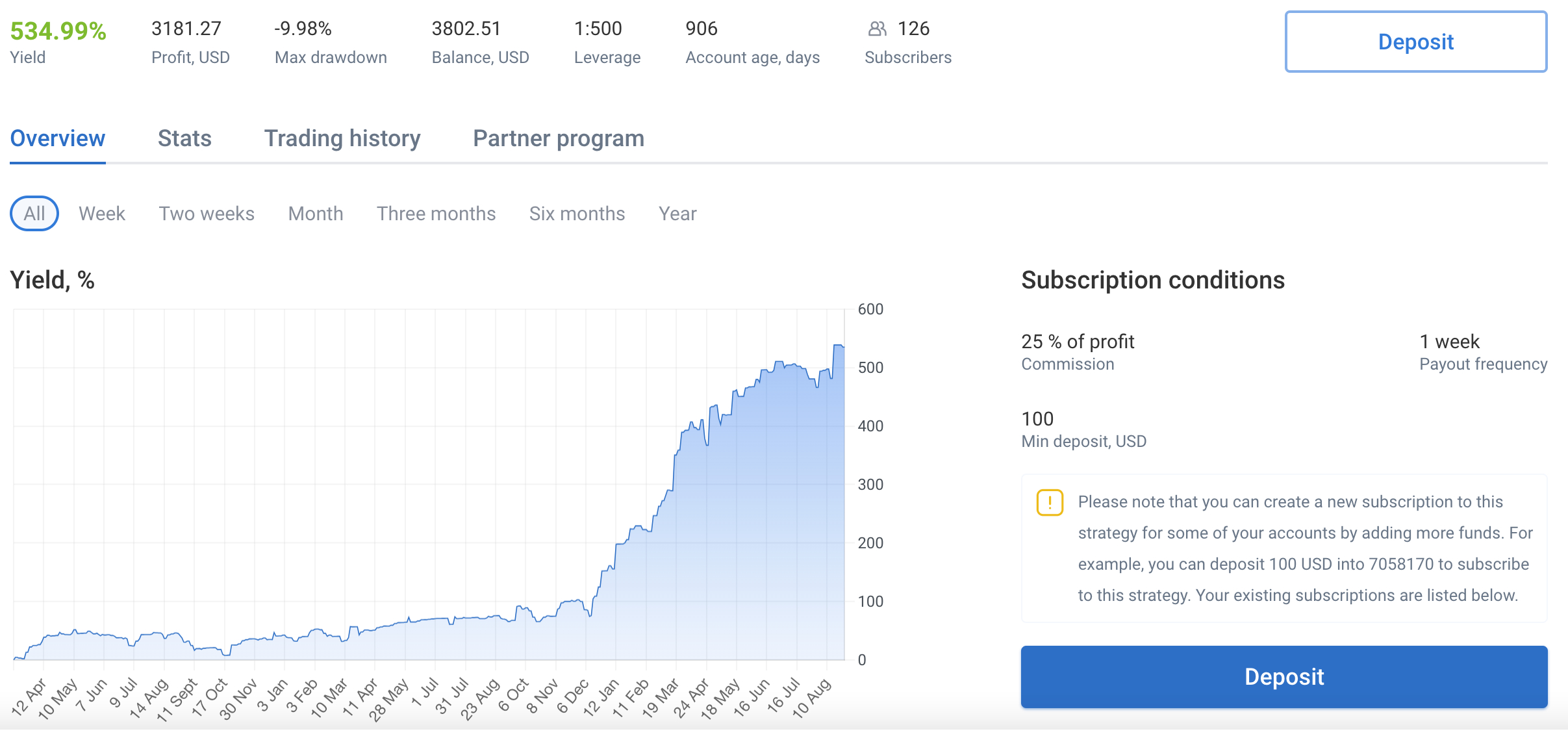
A high historical return alone is not enough.
You should also consider:
- Maximum drawdown
- Track record length
- Trading frequency
- Leverage
- Average holding time
- Position sizing
- Markets traded
A trader who generated a very high return with extreme drawdowns may be significantly riskier than a trader with lower returns and more controlled risk.
Choosing a Signal Provider
Signal trading requires a different type of evaluation.
You need to understand how the signals are generated.
Is there a defined strategy?
Is the track record publicly available?
Are losing trades shown as well?
Are stop losses consistently used?
How frequently are signals generated?
A list of profitable trade screenshots is not the same as a verifiable long-term track record.
Copy Trading vs Signal Trading for Beginners
Copy trading may appear particularly attractive to beginners because it reduces the need to manually analyse and execute every trade.
But beginners should not confuse convenience with simplicity.
You still need to understand what strategy you are copying and what risks it involves.
Signal trading requires more involvement, but that can also create a stronger learning opportunity.
Instead of simply copying a trade, you can analyse why the signal was generated and compare it with your own market view.
Signal Trading for Experienced Traders
Experienced traders may prefer signal trading because it gives them more flexibility.
A signal can provide an additional perspective without taking away their own decision-making process.
For example, a trader may receive a short signal on Nasdaq and then compare it with their own technical analysis.
If both approaches point in the same direction, they may take the trade.
If they disagree, they can simply ignore it.
Can Copy Trading Be Used as Part of a Larger Strategy?
Copy trading does not necessarily have to replace your own trading.
Some traders use it as one component of a broader portfolio.
For example, part of the capital may follow another trader while the rest is traded independently.
This can provide exposure to a different strategy.
However, diversification should not be assumed simply because multiple traders are being copied.
Two traders can have very different names but still take highly correlated positions.
Copy Trading vs Signal Trading: Costs
Costs vary significantly between providers.
Copy trading may involve platform fees, performance fees, spreads, commissions or other trading costs.
Signal services may charge monthly or yearly subscription fees.
There can also be normal broker costs associated with executing the trades.
The advertised price therefore does not always represent the total cost.
A proper comparison should consider the complete cost of using the service.
Transparency Matters
Whether you choose copy trading or signal trading, transparency should be one of the most important criteria.
Look for actual trading data rather than isolated winning trades.
A useful track record should show both profitable and losing periods.
Drawdown is particularly important because it shows how much the strategy has historically lost from a peak.
A strong return means little if you do not understand the risk taken to achieve it.
Copy Trading vs Signal Trading: Which Is Better?
There is no universal winner.
Copy trading can make sense for someone who values automation and wants to follow a specific trading strategy without manually executing every position.
Signal trading may be better suited to someone who wants external trade ideas while keeping full control over execution.
The right choice depends on your:
Trading experience.
Time available.
Risk tolerance.
Level of control.
Trading strategy.
Copy Trading vs Signal Trading – Quick Comparison
| Copy Trading | Signal Trading | |
|---|---|---|
| Execution | Automated | Manual |
| Control | Lower | Higher |
| Time required | Lower | Higher |
| Trader selection | Essential | Signal provider selection |
| Execution responsibility | Mostly automated | Your responsibility |
| Flexibility | More limited | Higher |
| Learning potential | Lower | Higher |
| Risk | Still significant | Still significant |
Conclusion
The difference between copy trading vs signal trading ultimately comes down to control.
Copy trading automates the execution of another trader’s decisions.
Signal trading gives you the information and leaves the final decision to you.
Neither approach automatically produces better results.
The real question is whether you want to follow another trader automatically or use someone else’s analysis while making your own trading decisions.
Whichever approach you choose, focus on track record, drawdown, execution, costs and transparency rather than simply chasing the highest advertised returns.
Overview of Topics