One platform has more traders. Another advertises lower fees. One offers a polished mobile app, while another focuses on advanced analytics and risk controls.
But choosing a copy trading platform based on the number of available traders or a headline return is rarely enough.
The real question is not simply which platform has performed best.
It is:
Which platform gives you the information, controls and conditions you need to make an informed decision about who and what you are copying?
That makes a proper comparison much more useful than a simple list of platforms.
What Is a Copy Trading Platform?
A copy trading platform connects traders who make their own trading decisions with users who want to replicate those trades.
Instead of manually opening every position, the copying process is handled by the platform.
Depending on the provider, the copied trades can be proportional to the size of the account, based on a defined risk level or implemented according to other allocation rules.
The exact mechanics vary significantly between platforms.
That is why comparing the underlying system is more important than simply comparing names.
Why a Copy Trading Platform Comparison Is Important
Copy trading is often presented as an easy way to participate in financial markets.
The technical process can indeed be simple.
However, the simplicity of copying a trade does not mean that selecting a trader or platform is simple.
A platform determines what information you can see, how trades are executed and what risk controls are available.
It can also determine which fees you pay and how much control you have over the copying process.
A meaningful comparison should therefore look beyond marketing claims.
The Most Important Factors in a Copy Trading Platform Comparison
There are several areas worth examining before choosing a platform.
Performance is one of them, but it should never be considered in isolation.
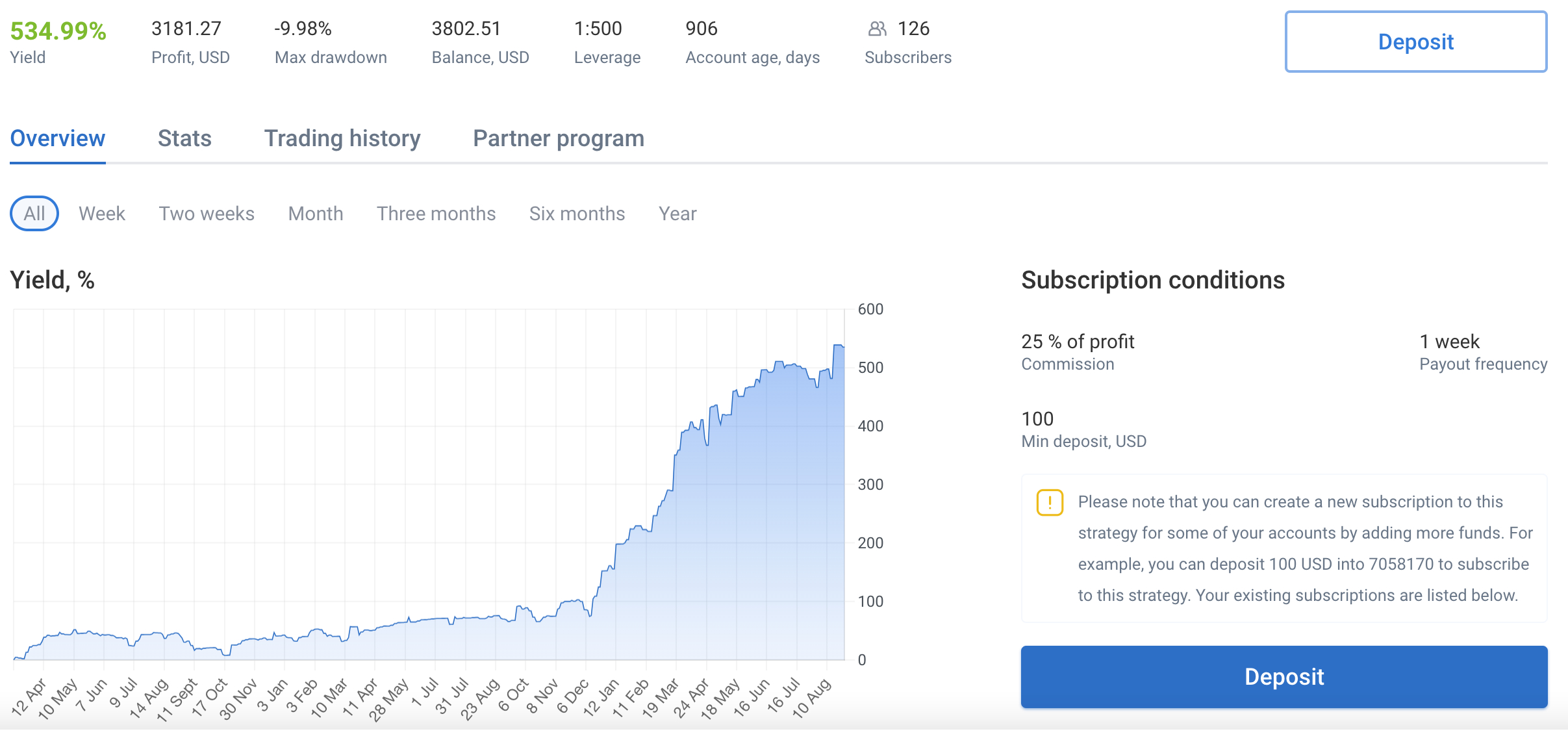
The trading history, drawdown, trading frequency, leverage, average holding time and risk per position can tell you much more about how a trader actually operates.
The platform itself should also be examined.
How transparent is the performance data?
Can you see historical drawdowns?
Are losing periods visible?
Can you stop copying whenever you want?
Are there risk-management settings?
And what happens when the trader changes their strategy?
These questions can be more important than a single performance figure.
Copy Trading Platform Fees
Costs are one of the easiest factors to compare, but they are often more complicated than they initially appear.
A platform may charge a subscription fee, performance fee or spread-related costs.
Depending on the underlying broker model, additional trading costs may also apply.
A platform advertising free copy trading does not necessarily mean that copying trades is completely free.
The relevant question is therefore:
What does the entire trading process cost?
This can include spreads, commissions, overnight financing, platform fees and potential performance-based charges.
Minimum Deposit
The minimum amount required to start copy trading varies between platforms.
A low minimum deposit can make a platform accessible to more users.
However, the minimum deposit should not be confused with the amount that is actually appropriate for the strategy being copied.
A trader with significant drawdowns may require considerably more capital to manage risk comfortably.
The starting balance should therefore be considered together with the strategy’s historical risk.
Available Traders
One of the main attractions of copy trading is the ability to choose between different traders.
Some platforms offer a relatively small selection.
Others provide thousands of profiles.
A larger selection does not automatically mean a better platform.
If hundreds or thousands of traders are available, filtering and analysing them becomes even more important.
A good platform should make it possible to distinguish between traders based on meaningful data rather than simply showing the highest returns first.
Copy Trader Performance
Performance is usually the first metric people look at.
It is also one of the easiest to misunderstand.
A trader showing a 200% return may appear more attractive than someone showing 30%.
But the first trader may have experienced an 80% drawdown to achieve that return.
The second may have generated their performance with considerably less risk.
For this reason, a copy trading platform comparison should always examine performance alongside drawdown.
Drawdown Matters
Drawdown measures how far an account has fallen from a previous peak.
It provides an indication of the losses a trader has experienced during a specific period.
A strategy with high returns but extreme drawdowns can behave very differently from a strategy with moderate returns and controlled drawdowns.
This is particularly important for copy trading because you are not simply looking at past profitability.
You are deciding whether you are comfortable with the potential path the strategy takes to achieve those results.
Trading History
A trader’s history can reveal much more than their current return.
A longer track record provides more information about how the strategy behaves under different market conditions.
For example, a trader may have performed exceptionally well during a strong trend but struggled during sideways markets.
A short track record may not reveal this.
When comparing copy trading platforms, look at how much historical information is available and whether the platform presents it transparently.
Number of Trades
The number of trades can help put performance into context.
A trader who achieved a certain return through hundreds of positions has a different trading profile from someone who achieved the same return through five highly leveraged trades.
Neither approach is automatically better.
But they involve very different risks.
A platform should ideally provide enough information to understand the trader’s activity.
Trading Style
Copy traders can follow very different strategies.
Some trade forex.
Others focus on indices, commodities, stocks or cryptocurrencies.
Some hold positions for minutes.
Others hold them for weeks or months.
A trader’s style should therefore match your own expectations regarding risk and time horizon.
A platform comparison should make these differences visible rather than reducing every trader to a single performance percentage.
Risk Management Features
Risk management is one of the most important areas to examine.
Depending on the platform, users may be able to adjust the amount copied, set maximum losses or stop copying automatically under certain conditions.
These controls can make a significant difference.
However, no risk-management setting can eliminate market risk.
If the underlying trader uses aggressive leverage or experiences a major loss, the copying account can still be affected.
Risk controls should therefore complement careful trader selection rather than replace it.
Can You Stop Copying?
An important question is how much control you have after starting to copy a trader.
Can copying be stopped immediately?
What happens to existing positions?
Are they automatically closed or do you have to manage them manually?
How quickly are changes applied?
These details can become particularly important during volatile market conditions.
A platform may make starting a copy relationship extremely easy while giving less attention to what happens when you want to exit.
Execution Differences
A copied trade does not necessarily produce exactly the same result as the original trader’s trade.
Execution can vary because of latency, liquidity, spreads and the size of the account.
The entry price can therefore differ slightly.
This is particularly relevant for strategies that depend on small price movements or very short holding periods.
When comparing platforms, it is worth understanding how trade copying is technically implemented and how execution differences can affect results.
Transparency of Performance Data
Transparency should be one of the central criteria in a copy trading platform comparison.
A platform should make it possible to understand how a trader achieved their performance.
Ideally, you should be able to examine the account history, drawdown, trading activity and other relevant metrics.
A simple chart showing cumulative returns tells you very little by itself.
The more information available, the easier it becomes to evaluate whether a strategy fits your own risk tolerance.
Real Track Record vs Marketing
Marketing can make almost any trading strategy look attractive.
Screenshots of profitable trades are easy to publish.
A long-term track record is much harder to fake convincingly.
This is why historical account data matters.
Look beyond individual winning trades and examine how the account performed over time.
A strategy should ideally be evaluated across both profitable and difficult periods.
Broker and Platform Relationship
Another factor often overlooked is the relationship between the copy trading platform and the broker.
Some services operate their own trading environment.
Others connect to external brokers.
This can affect spreads, execution, available instruments and account conditions.
A platform comparison should therefore include the underlying broker environment rather than evaluating the copy trading interface alone.
Regulation and Security
Before depositing money, it is important to understand which company actually holds the funds and which entity provides the trading service.
The copy trading technology itself is not the same thing as financial regulation.
Depending on the structure, the platform, broker and trader may all be separate entities.
Check which company you are contracting with and what regulatory framework applies.
This is particularly important when comparing platforms operating in different jurisdictions.
Copy Trading Platform Comparison for Beginners
Copy trading can appear particularly attractive to people who do not want to trade manually.
But beginners should not interpret copying as a way to remove the need to understand markets.
You are still exposed to the strategy you choose.
If the trader makes a poor decision, the copied account can lose money as well.
Before using a platform, it is therefore worth understanding basic concepts such as drawdown, leverage, position sizing and risk management.
Copy Trading for Experienced Traders
Copy trading is not limited to beginners.
Experienced traders may use it to diversify strategies, follow other approaches or allocate capital across different trading systems.
For this group, more advanced information becomes particularly important.
Trade-level data, execution, risk metrics and strategy behaviour can be more useful than simplified performance rankings.
The best platform is therefore partly determined by the experience of the person using it.
Copy Trading Platform Comparison: Don’t Compare Returns Alone
Imagine two traders.
Trader A has generated a 100% return with a maximum drawdown of 50%.
Trader B has generated a 45% return with a maximum drawdown of 10%.
Looking only at returns makes Trader A appear superior.
Looking at the relationship between return and risk creates a very different picture.
This does not automatically make Trader B the better choice.
It simply demonstrates why performance needs context.
How Long Should a Track Record Be?
There is no universal number that makes a track record sufficient.
However, a longer history generally provides more information than a very short period.
A trader who has been active through different market environments offers more data for evaluation than someone who has only traded profitably for a few weeks.
A strong recent return can be interesting.
It should not automatically outweigh a much longer history.
What About the Highest-Ranked Traders?
Many copy trading platforms rank traders according to performance.
This can make the selection process appear easy.
Simply choose one of the top performers.
That approach can be dangerous.
The highest-ranked trader may have recently experienced an unusually strong period.
Other traders may have generated similar returns with lower risk.
Ranking systems can also encourage users to chase recent performance.
Instead of automatically selecting the first profile on the list, analyse the underlying data.
Copy Trading Platform Comparison Checklist
Before choosing a platform, ask yourself:
How transparent is the trader data?
What are the total costs?
Which markets are available?
How long are the available track records?
What drawdown has each trader experienced?
Which risk controls are available?
How are trades executed?
Who holds the trading funds?
Which company provides the service?
What happens when you stop copying?
These questions provide a much better basis for comparison than simply looking at the number of users or the highest advertised return.
The Best Copy Trading Platform Is Not the Same for Everyone
There is no universally best copy trading platform.
Someone interested in forex may have very different requirements from someone looking for stock or crypto strategies.
A trader who wants complete control may prefer advanced risk settings.
Another user may value simplicity and ease of use.
The right platform therefore depends on what you want to achieve and how much control you want over the copying process.
Conclusion: How to Compare Copy Trading Platforms Properly
A useful copy trading platform comparison goes far beyond comparing returns.
Look at the platform itself, the available traders, historical performance, drawdown, costs, execution, regulation and risk-management tools.
Most importantly, don’t confuse a strong historical return with a low-risk strategy.
Copy trading does not remove market risk. It simply changes how trading decisions are implemented in your account.
The goal of a good comparison is therefore not to find the trader with the biggest percentage on the screen.
It is to understand how that performance was generated, what it cost and what level of risk came with it.
That information gives you a much more useful basis for deciding whether a particular copy trading platform and strategy actually fits you.
Overview of Topics
- What Is a Copy Trading Platform?
- Why a Copy Trading Platform Comparison Is Important
- The Most Important Factors in a Copy Trading Platform Comparison
- Copy Trading Platform Fees
- Minimum Deposit
- Available Traders
- Copy Trader Performance
- Drawdown Matters
- Trading History
- Number of Trades
- Trading Style
- Risk Management Features
- Can You Stop Copying?
- Execution Differences
- Transparency of Performance Data
- Real Track Record vs Marketing
- Broker and Platform Relationship
- Regulation and Security
- Copy Trading Platform Comparison for Beginners
- Copy Trading for Experienced Traders
- Copy Trading Platform Comparison: Don’t Compare Returns Alone
- How Long Should a Track Record Be?
- What About the Highest-Ranked Traders?
- Copy Trading Platform Comparison Checklist
- The Best Copy Trading Platform Is Not the Same for Everyone
- Conclusion: How to Compare Copy Trading Platforms Properly
- Follow Verified Traders Now