The Situation Around Exness Copy Trading in 2026
Copy trading has been one of the easiest entry points into forex and CFD trading for years. Instead of building your own strategy, you simply connect to a trader and replicate their positions automatically.
Exness played a major role in making this model widely accessible. But in 2026, things are clearly shifting.
Copy trading on Exness is being gradually phased out. It’s not a sudden shutdown, but a structured wind-down of the service across different regions and account types.
For traders, this raises a simple question: what replaces it, and what does this change actually mean in practice?
What Is Changing at Exness
The most important point is not a dramatic announcement, but the direction.
Access to copy trading has been reduced step by step. New users in many regions are no longer able to fully register for the feature, and existing users are operating in a system that is no longer being developed further.
Instead of expanding the social trading infrastructure, the focus has clearly shifted toward core trading services like execution, spreads, and platform stability.
In simple terms: copy trading is no longer a priority product.
It is being phased out rather than evolved.
Why This Shift Is Happening
On the surface, copy trading looks like a perfect product. It attracts beginners, creates engagement, and generates trading volume.
But over time, several structural issues become visible.
The first is expectations versus reality. Many users enter copy trading with the idea of passive income. They assume that following a “good trader” is enough to achieve consistent results. But markets don’t work in a linear way. Even strong strategies go through losing periods, and when that happens, inexperienced users often react emotionally.
The second issue is transparency and responsibility. Copy trading creates a layered structure where it is not always clear who is responsible for performance outcomes. The trader, the follower, and the broker are all indirectly connected.
The third factor is regulation and operational complexity. As financial regulations tighten globally, brokers are increasingly reducing services that create unclear accountability structures.
Finally, there is a strategic shift in the industry itself. Brokers are focusing more on execution quality and infrastructure rather than social trading ecosystems.
What This Means for Traders
For traders currently using Exness copy trading, nothing changes overnight. Positions are not suddenly removed and systems are still functional in the short term.
However, the long-term direction is clear. This is a transition phase, not a stable product environment anymore.
Anyone relying heavily on copy trading as their primary strategy should understand that this model is becoming less supported over time.
That doesn’t mean copy trading is gone everywhere. But it does mean it is losing its role as a central trading solution.
The Real Problem in Copy Trading
The biggest misunderstanding in copy trading is not technical. It is behavioral.
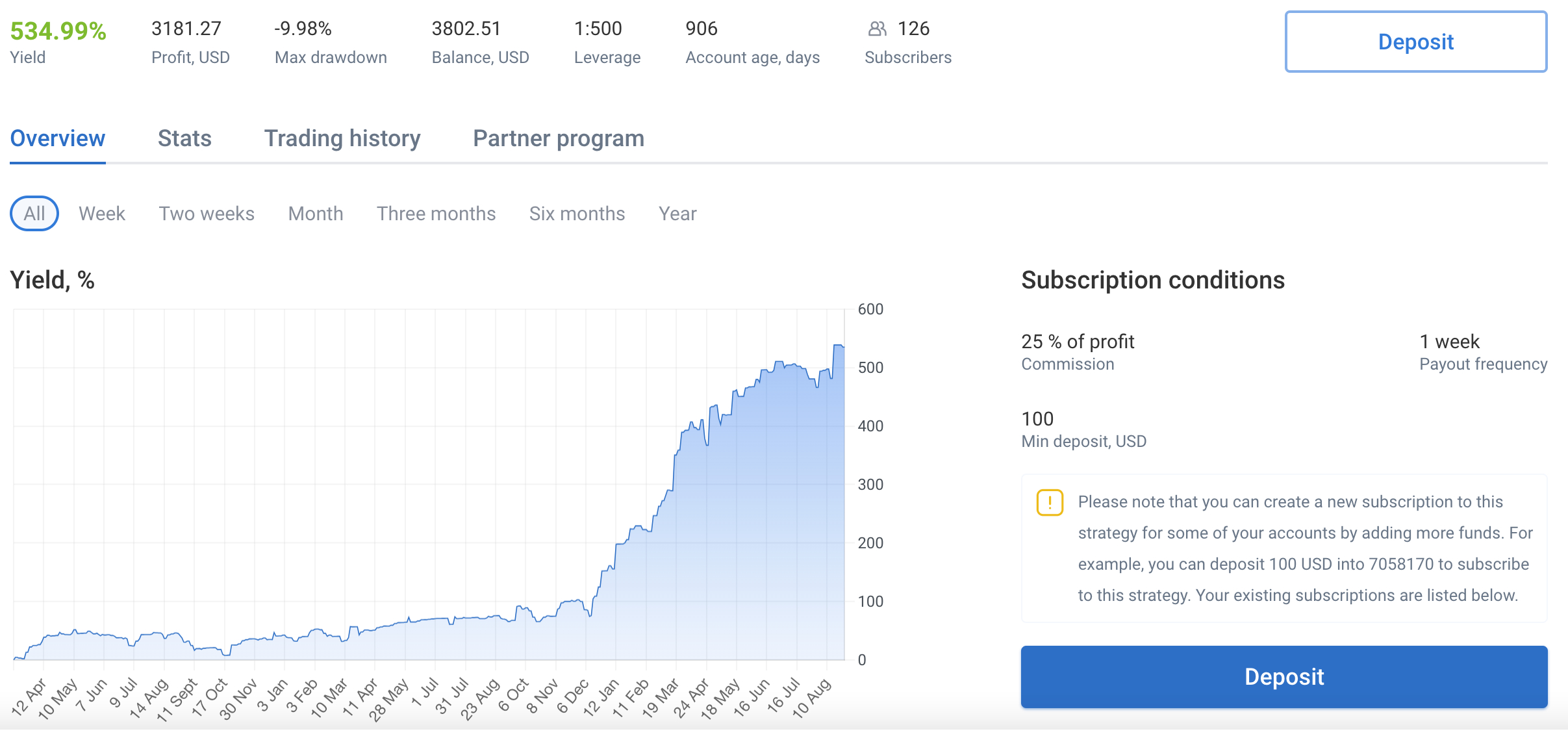
Most people don’t evaluate strategies properly. They follow performance curves without understanding risk, drawdown behavior, or consistency.
A strategy that looks good in a short time frame can still be completely unstable long term.
When markets change, these weaknesses become visible very quickly.
This is why copy trading often creates cycles of excitement followed by frustration. It is not because the concept itself is wrong, but because the selection process is usually not structured.
Why Strategy Quality Matters More Than Ever
The removal of copy trading from major brokers like Exness highlights something more important than the feature itself.
It shifts responsibility back to strategy quality.
Instead of relying on automated copying, traders are increasingly forced to evaluate:
- How consistent a strategy really is
- How risk is managed across different market phases
- Whether performance is stable or purely statistical luck
- How transparent the trading logic actually is
This is where the difference between random signal providers and structured systems becomes important.
Moving Toward Structured Providers
As copy trading environments become less stable, many traders are shifting toward more controlled setups.
This includes providers and systems that apply strict selection criteria rather than open-copy ecosystems.
The focus is no longer just on performance, but on sustainability.
That means:
- Controlled risk exposure
- Verified long-term track records
- Transparent strategy logic
- Clear performance evaluation standards
- No unrealistic return expectations
This approach reduces dependency on individual traders and focuses more on system quality.
The idea is not to follow anyone blindly, but to work with providers that meet strict criteria before they are even available to users.
Why This Direction Makes Sense
The evolution away from open copy trading toward structured strategy systems is not random.
It reflects a maturity shift in retail trading.
Early-stage traders often look for shortcuts. Later-stage traders start looking for consistency and control.
The industry is slowly moving in the same direction.
Instead of maximizing access to “top traders,” the focus is shifting toward filtering quality before exposure happens.
This reduces emotional trading cycles and creates more realistic expectations.
Final Thoughts
The Exness copy trading phase-out in 2026 is not just a product update. It is part of a broader shift in how retail trading is structured.
Copy trading is becoming less central, not because the idea is completely flawed, but because the execution often leads to unrealistic expectations and unstable behavior.
For traders, the key takeaway is simple.
The future is less about copying and more about evaluating.
And that means focusing on strategies and providers that are built on strict, transparent, and sustainable criteria rather than open and uncontrolled selection systems.
And in a market that is constantly changing, structure tends to survive longer than shortcuts.
Overview of Topics